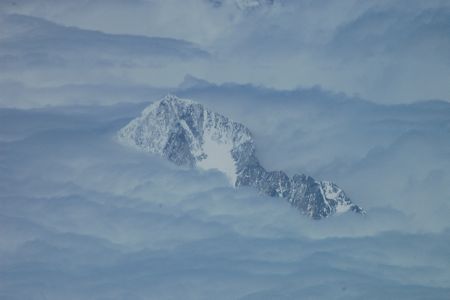
Day 4 – June 29 – Lhasa to Gyantse
I should have mentioned earlier that we had a guide – Bhuchung Tsering, a local Tibetan who had been guiding for about 3 years. He would work during the summer and freeze his @$$! off in the winter. He and the driver were going to take us to the Tibet-Nepal border where we would meet another guide. Within Tibet, for foreigners to travel, you need a guide and proper papers. And the deeper you go outside of Lhasa, the more paperwork you need.
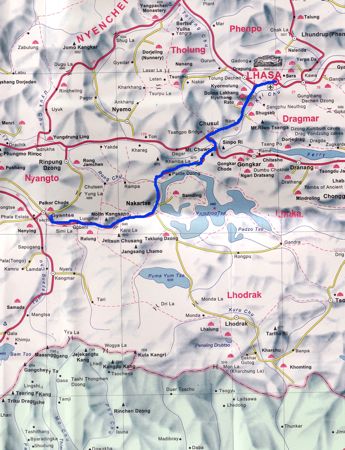
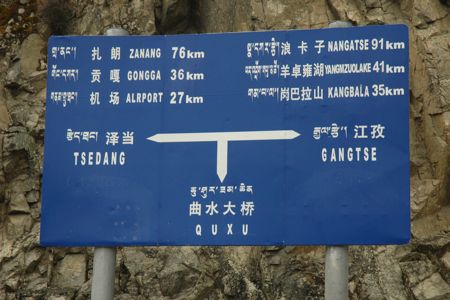
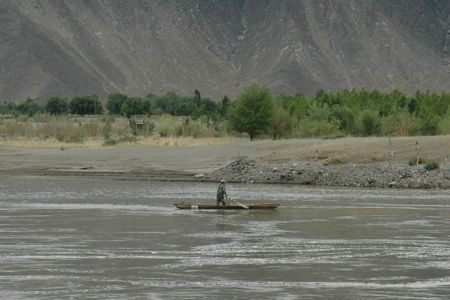
Today was an early start as we had 670km/416miles to travel to the town of Gyantse. The road is known as the “Friendship Highway†as it winds over the plains, passes and alpine valleys to Nepal. Until about 2 years ago, much of the road was still dirt, but the Chinese government has been on an infrastructure improvement spree. We made a quick first stop just outside Lhasa to see people floating the down the river in yak skin boats. After the stop, we had to slow frequently for the various livestock herds moving down the road.
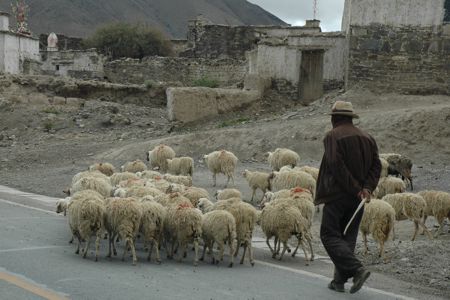
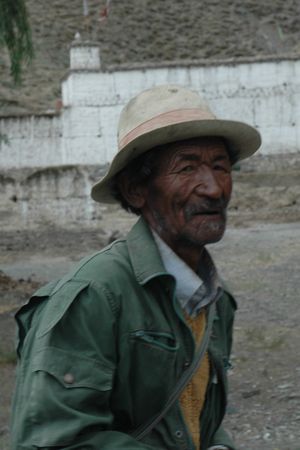
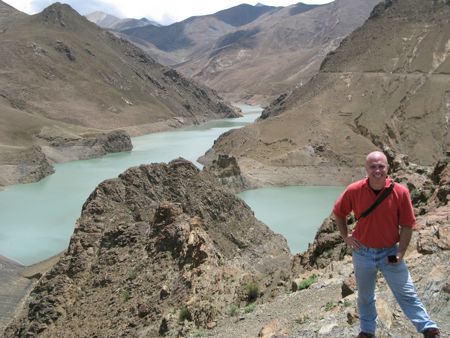
It was then we started winding up from 3, 600 meters to 4, 900 meters for a stop overlooking Yamdok Lake, also known as Yumzu or turquoise lake. As the road wound down to the lakeside, there was a lone sheep-herder along the shore line.
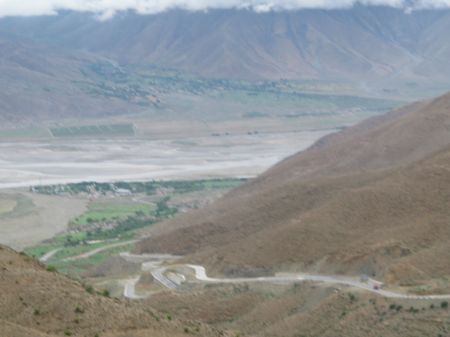
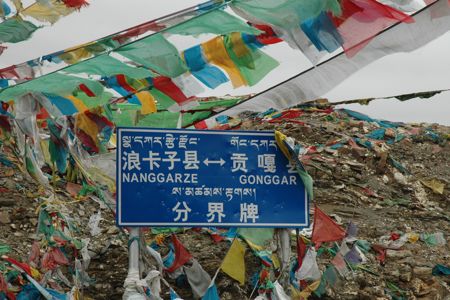
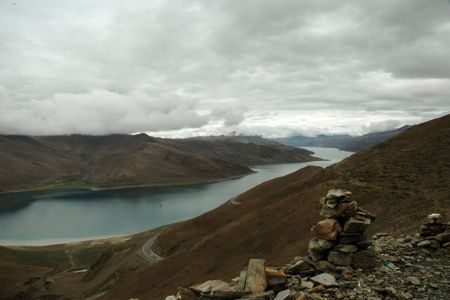
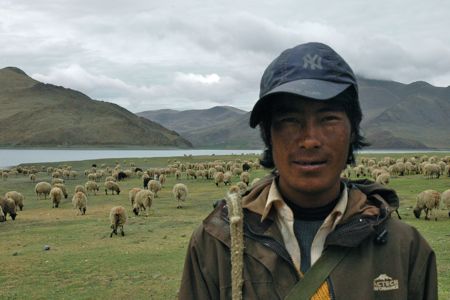
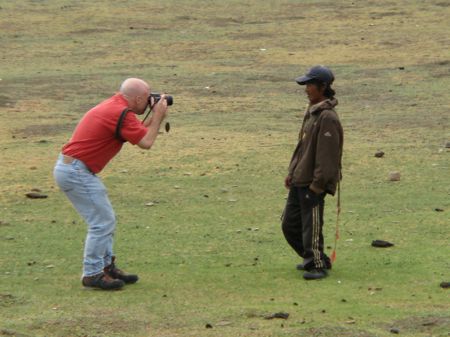
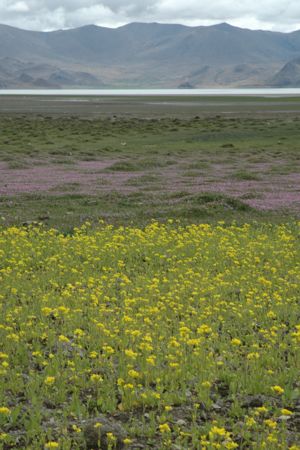
After a brief lunch stop were we had some sort of Chinese food (which we told our guide – never again, Tibetan food only), we made our way along the shores of various lakes and lovely fragile meadows alive with wild flowers.
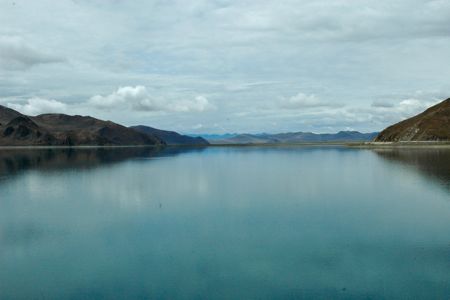
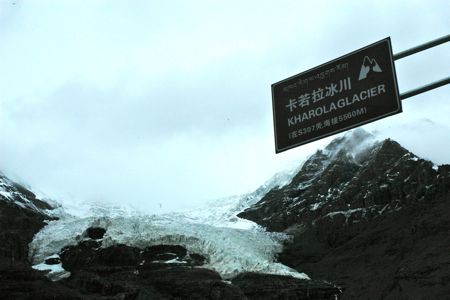
From the alpine Tibetan meadows, we climbed toward Korola pass (5, 500m) and wound down to the foot of Karola Glacier. The summit of the glacier is perched on Nainching Kansa that reaches to over 7, 290 meters. The base of the glacier has receded from the roadway – Bhuchung told us that it had been receding faster and faster – climate change! At the parking area, there were a few families camped out, herding sheep, posing for photos and selling things to a few tourists that passed this way.
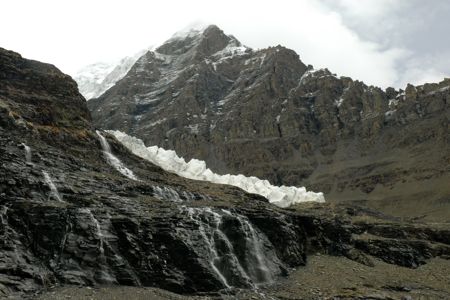
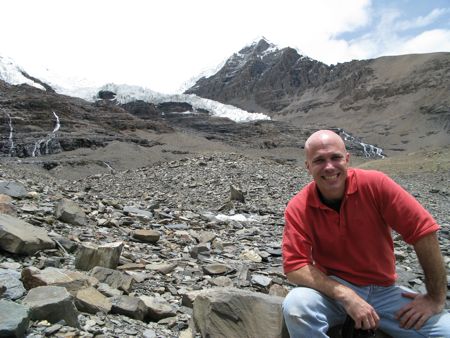
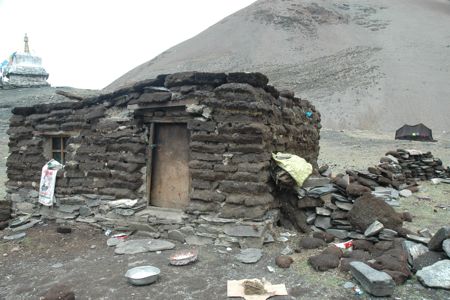
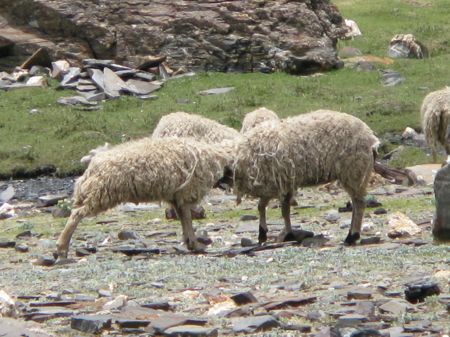
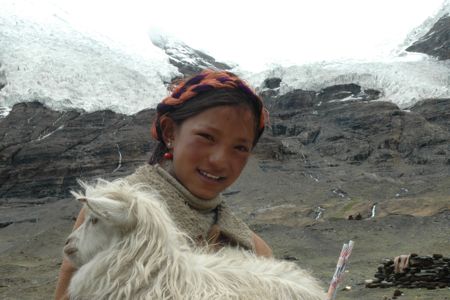
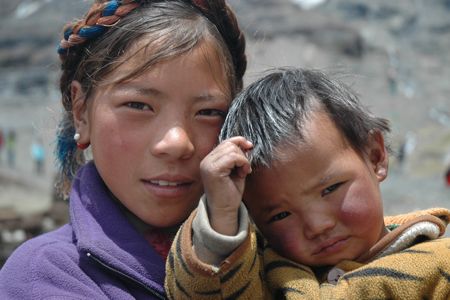
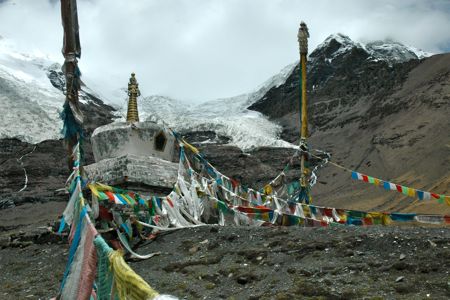
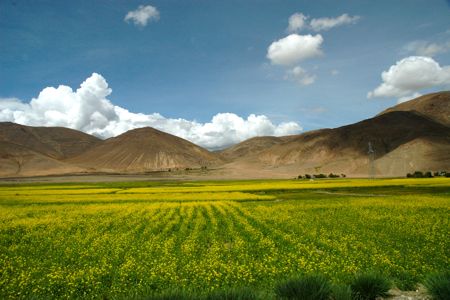
After our hike toward the face of the glacier where we enjoyed drinking the glacial melt, it was back down to the cars to head onward through Karola valley. As we made it past Karola valley, the Friendship Highway made its way through beautiful wide valleys glowing in the yellow flowers of rapeseeds in contrast to the stark un-vegetated hills behind . Beyond the gorgeous valleys, we had a stark contrast of a dead lake – the work of Chinese engineers installing a hydro-dam in the fragile eco-system.
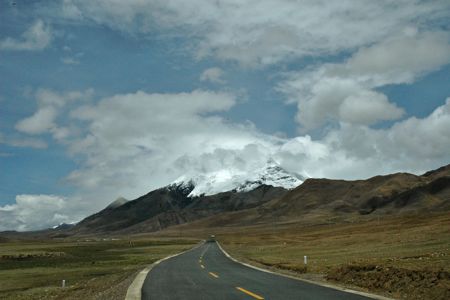
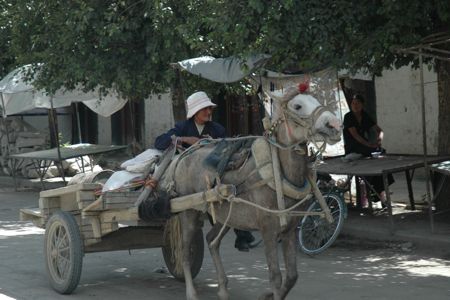
It was at this point that we noticed Norbu, our driver, pounding Red Bulls he had picked up earlier – to stay awake and alert along the way. Soon we entered Gyantse – a lovely multi-horse town. Horse carts were one of the favored modes of transport – and John and I hopped on the back of one as we wandered around town later.
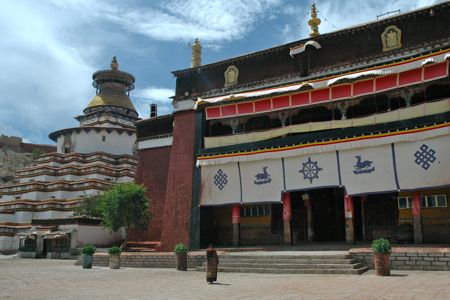
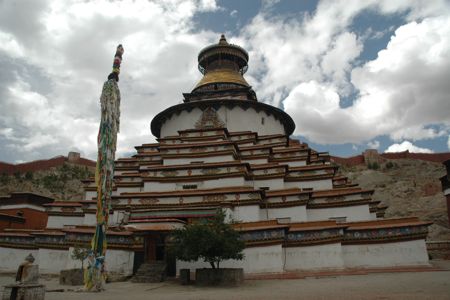
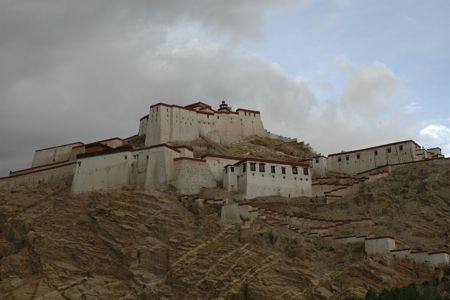
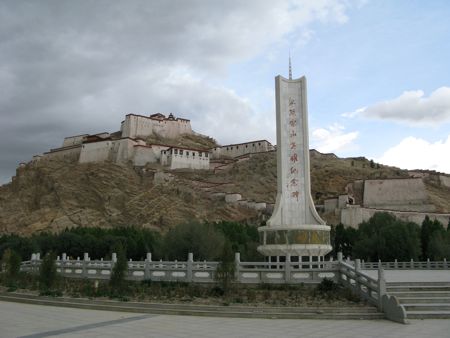
Our first stop in town was the Palcho Monastery and adjacent Kumbum Stupa (100, 000 images). The Kumbum was commissioned by a Gyantse prince in 1427 and was an important centre of the Sakya school of Tibetan Buddhism. This religious structure contains 77 chapels in its six floors and is illustrated with over 10, 000 murals, many showing a strong Nepali influence. Also perched above the town was a Dzong fort where the Dzong held off the British in 1904. Today the fort is used as an “anti-British Imperialism Museum†by the Chinese. Interesting irony regarding invasions, don’t you think?
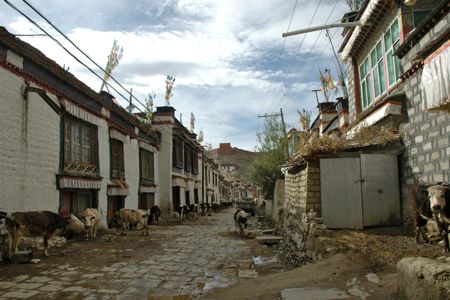
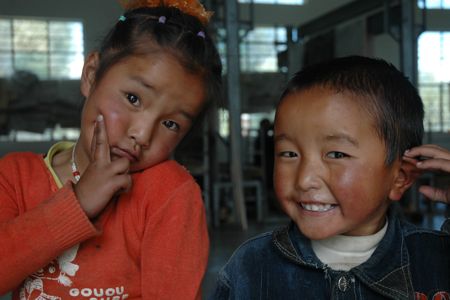
After our exploration of the Monastery, we spent time walking around town. We attracted a group of school kids who followed us for the next hour peppering us with questions. We found the town somewhat divided into the old section – mostly traditional Tibetan and the new section – mostly Chinese.
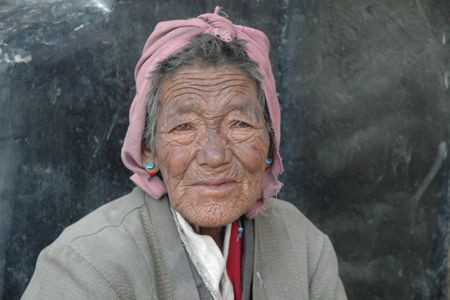
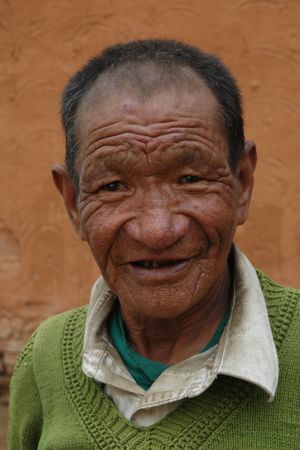
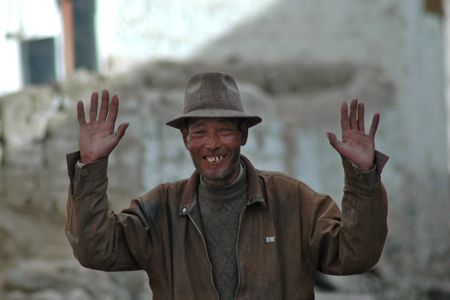
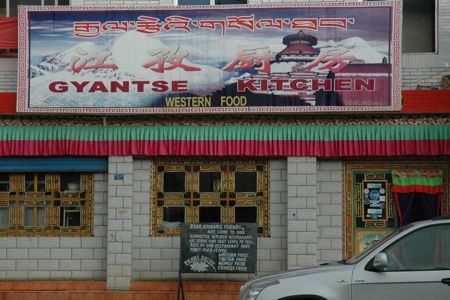
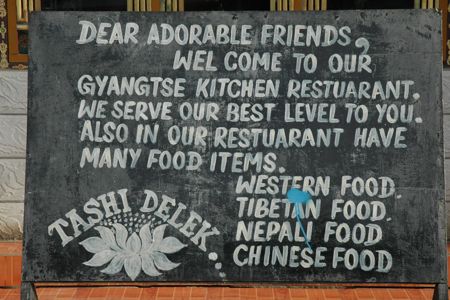
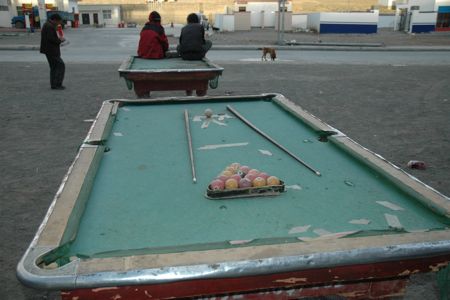
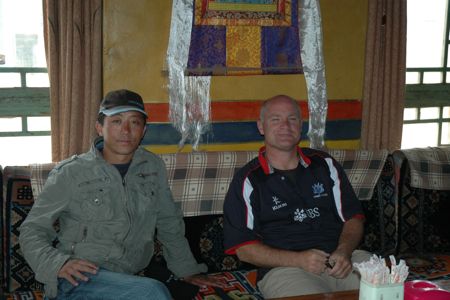
Finally, we settled down to dinner at Gyantse Kitchen where we met Phuntsok, a local guy working the restaurant. He had gone back and forth to Nepal for work, but wanted to come to Shanghai. As we ate our nice blend of Tibetan and Nepali food washed down with warm Lhasa beer, our new friend was asking all about Shanghai. He even offered to take us to KTV so that we would find him a job in Shanghai. In the end, we passed on the KTV offer and found a nice little hole-in-the-wall two table pool hall where John and I played a couple long games (because we are terrible pool players at high altitude – the physics are totally different!).
Day 5 – June 30 – Gyantse to Shegar (New Tingri)
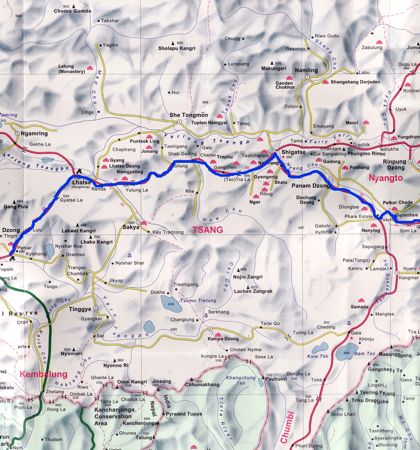
With another long day ahead of us, we got an early start. Today we would be covering 330km/205miles through the second largest city in Tibet, Shigatse. Then over two passes, with one being the highest along the Friendship Highway and ending the day in Shegar, our overnight spot prior to our trek to Everest Base camp.
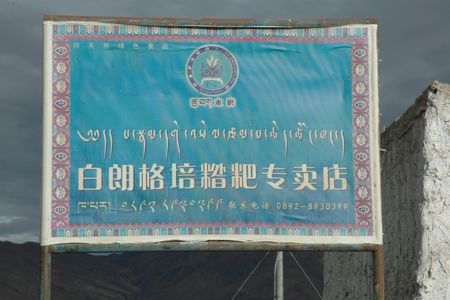
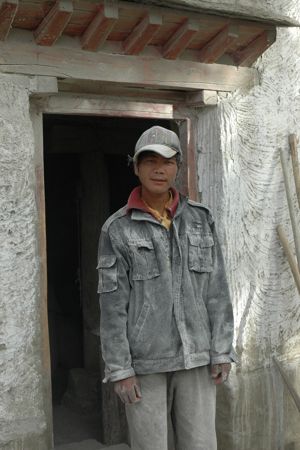
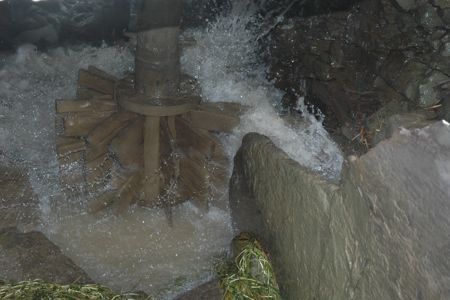
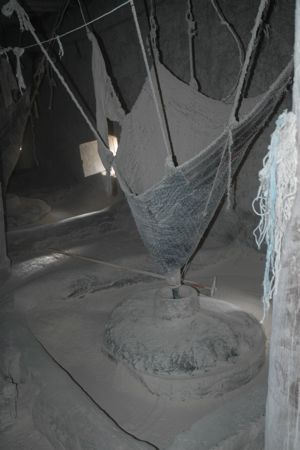
Our first stop of the day is the barley mill. Barley is an important staple in Tibetan life. At the high elevations, the growing season is rather short and fresh vegetables in winter-time are non-existent. Barley is used in a variety of ways. For breakfast it is mixed with yak milk into a gruel. It is also mixed with yak fat and water to create a soup. And, of course, it is made into wine. The mill is a cooperative, where all the families from the area bring their barley to be ground.
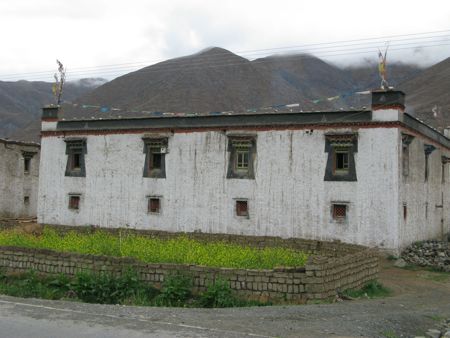
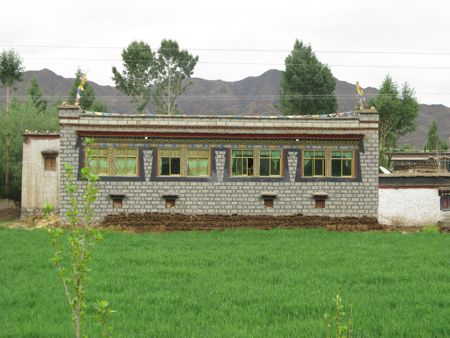
Along the way, we traversed beautiful landscapes. On either side of the roadway was an occasional group of houses amidst expansive barley fields. Across Tibet, the Chinese government has been spending money to upgrade. They have funded the building of new houses to replaces the traditional Tibetan style houses – while the new are similar, they are just not the same.
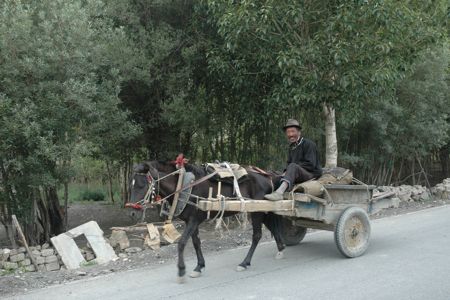
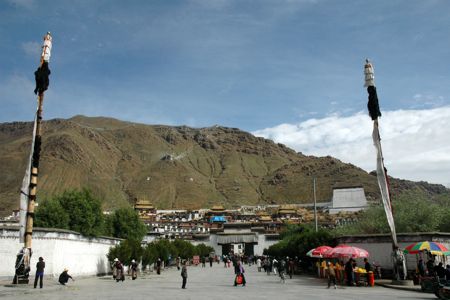
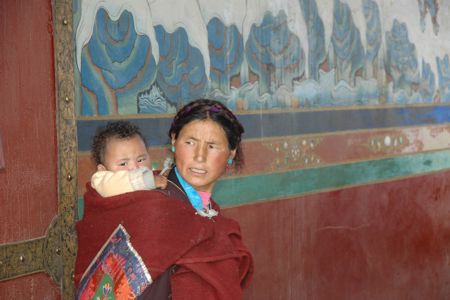
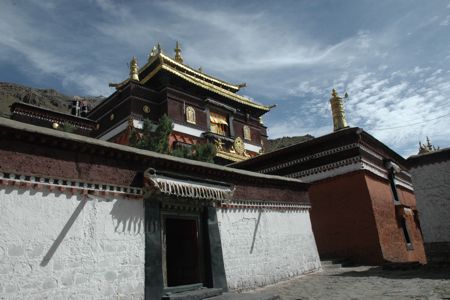
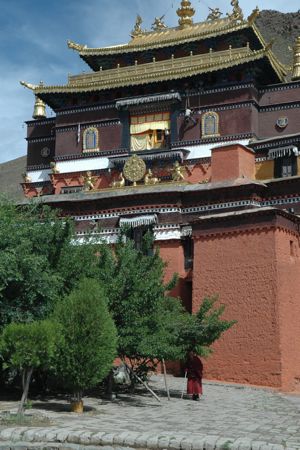
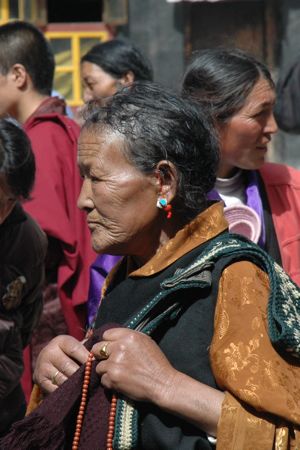
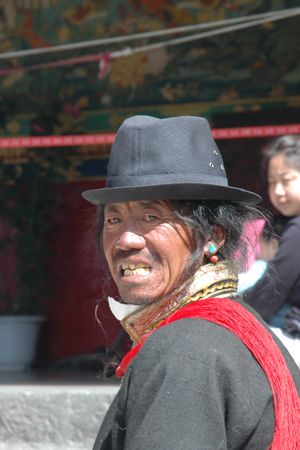
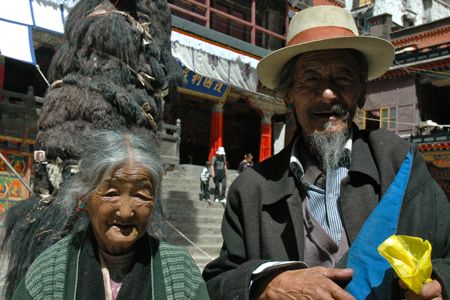
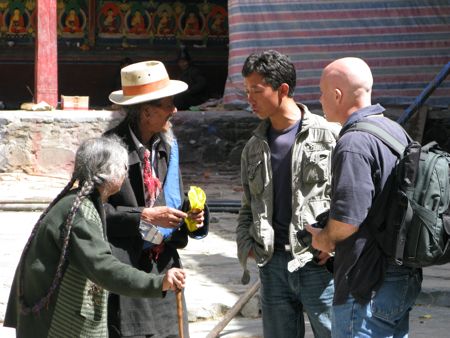
It was then on to Shigatse. Our guide, Bhuchung, is from Shigatse. This is also a point where we need to get our next set of permits to go deeper into Tibet. And, of course, there is a monastery – the Tashilumpo Monastery, the traditional seat of successive Panchen Lamas.
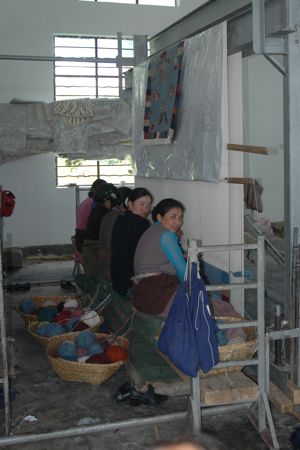
As I mentioned earlier, I had a mission for carpets. Shigatse is the home to one of the weavers who on occasion visits the Concordia bazaar in Shanghai. We had to have another short stop to see his ware and weavers in action.
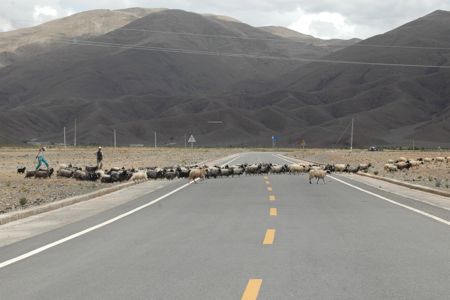
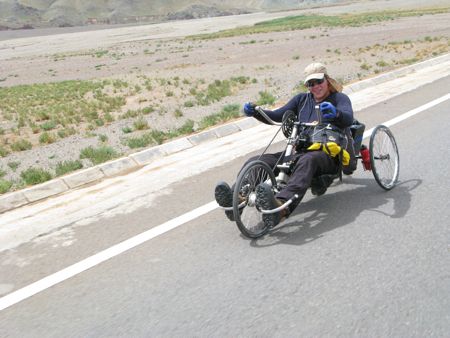
It was back on the road. Our next planned stop is at the top of Tsola Pass, elevation 4, 500 meters. Along the way, we were slowed by the occasional herd of sheep. We also ran across a group BIKING across Tibet – and a couple of them where using hand crank bikes. It made us re-evaluate our toughness, as we sat back and drank a beer in the car!
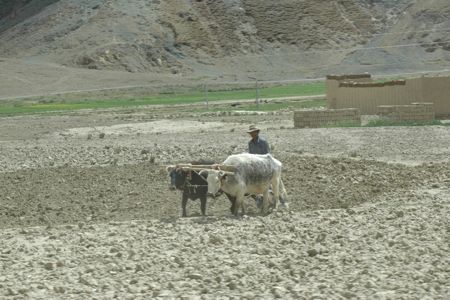
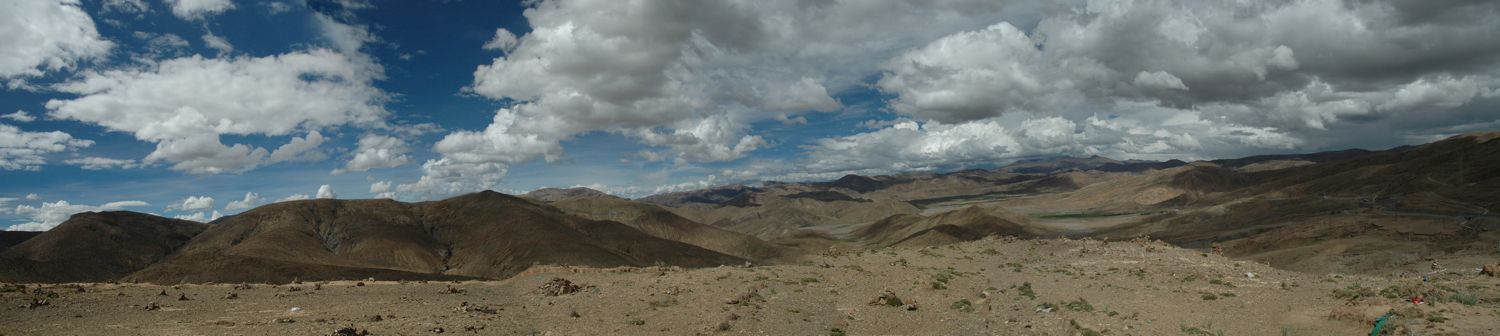
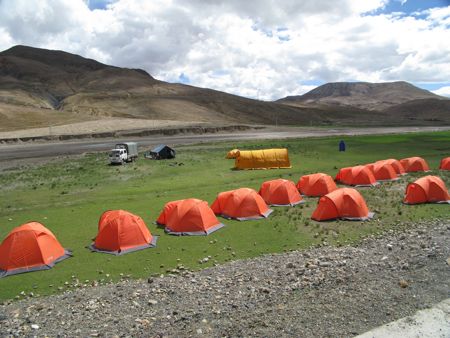
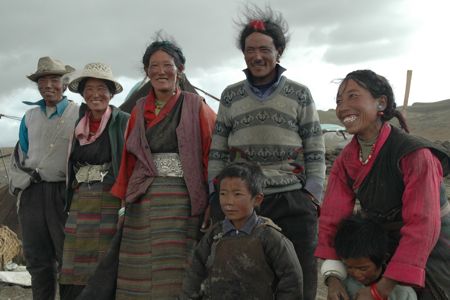
As we climbed further, we ascended to Gyatsola Pass, at 5, 220 meters, the highest pass on the Friendship highway. The ascent was steep, not more than 40 KPH up the hill on a roadway build directly up a river valley. The road was under constant repair due to wash-outs. Once at the apex, we found a group of Tibetan nomads camped along the side of the road.
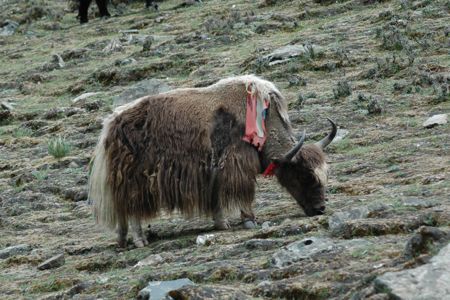
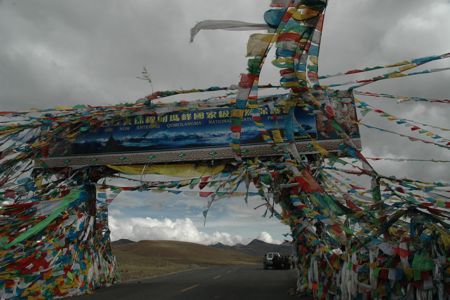
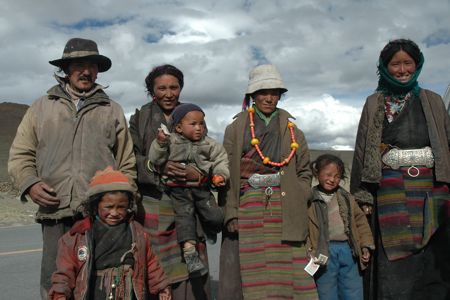
Further down the hill, we stopped to visit another family of traditional nomads just as the driving hale started. They invited us into their yaks’ wool tent – amazing stuff. Once inside, the wind could no longer be felt and we were told that when the yak wool gets wet, the weave tightens up to make it water tight.
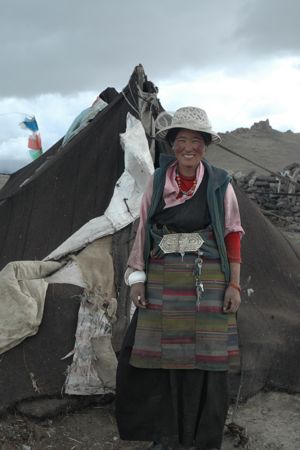
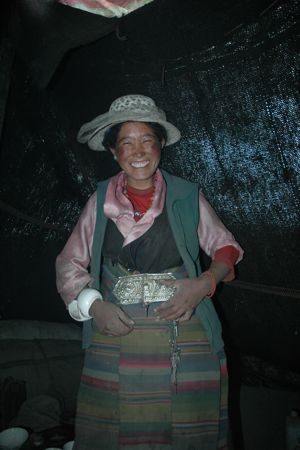
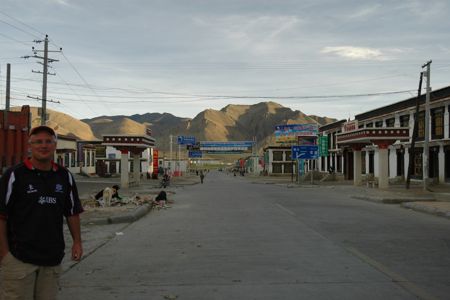
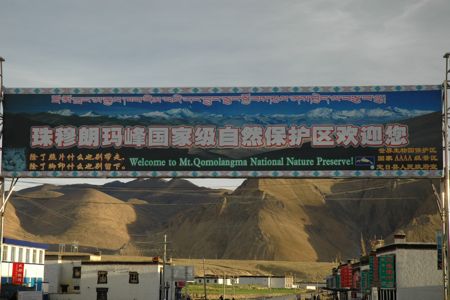
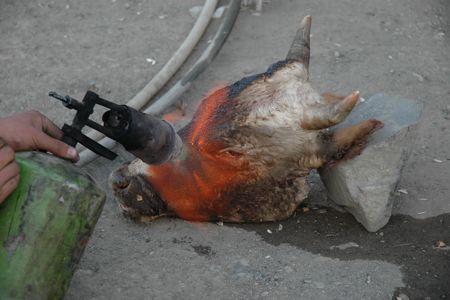
We further descended into Shegar. This is a town that is NOT noteworthy except that it is at the gateway to Everest. Here, we need to get our permits to go to Everest base camp. We were told that during climbing season, Shegar can be a bit busy. We settled into our hotel and walked the town for dinner and a bit of entertainment – the torching of a cow head in preparation for the dinner soup.
Day 6 – July 1 – To Everest Base Camp and beyond
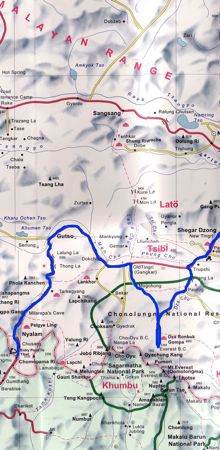
Today turned out to be one of the most intense and stimulating days of my life. The day started at 4am in Shegar and ended 22 hours later at the Tibet/Nepal border town of ZhangMu.
We had gone to bed the night before knowing we had an early start to see the sunrise over Everest. I awoke at 4am with anticipation and decided to get up to take some star shots. After pulling together my gear, I walked down the road from the hotel to a darkened spot in the road. I set up the tripod and camera, found the North star, opened the shutter…and the clouds moved across the sky. No photo! Not a positive start to the day – we need clear weather to see Mt. Everest.
With a box breakfast in hand, we set out in the dark at 5:30am toward GyaouLa Pass. Our first stop is the permit check point on the paved road where we all have to get out of the car and have the security guy match our face to passports. We then turn off onto the dirt road – and another security checkpoint. Finally, we are off – up the winding dirt road. At this point, I am glad that I cannot see where we are going because Norbu, the driver, is sliding around the hairpin turns up the hill.
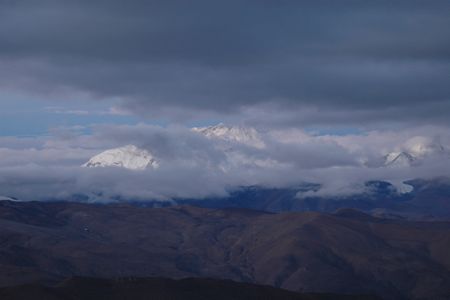
When we arrive at GyaouLa Pass (5, 200 meters), it is still dark. As twilight begins to break, all we see is clouds! Bhucheng teaches us the chant of the Compassion Buddha hoping Buddha will have some compassion on us! The chant goes like this – Ohm Ma Ni Pad Ma Hum, repeat again and again! Well, it worked! We got a great sunrise over Mt. Everest! I must have taken 100 photos as the sun rose – one every 15 seconds, as it was an amazing sight!
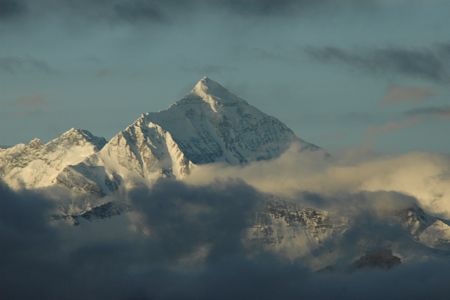
Bhucheng then hurried us into the car again, as the weather can change quickly and he wanted to get us to base camp before the clouds rolled back in. Norbu was at his finest sliding around the hairpin turns and down the dirt road through the moonscape as we pasted through tiny villages of herders and nomads.
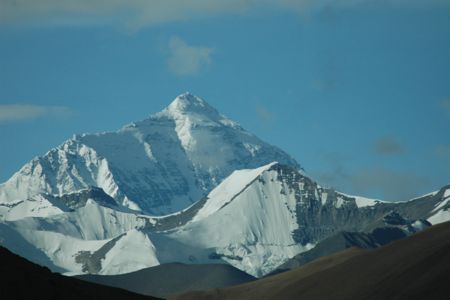
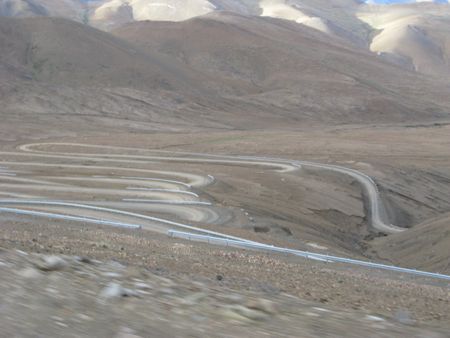
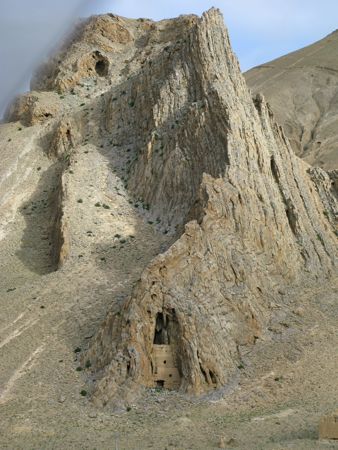
After 60 plus kilometers, we arrived at the base camp parking area to a completely fogged in Everest in front of us. The perimeter of the parking lot was surrounded by tents – some for sleeping, others for eating. Since we had eaten our meager box lunch in the dark, we needed something to eat before we started the hike to Base Camp.
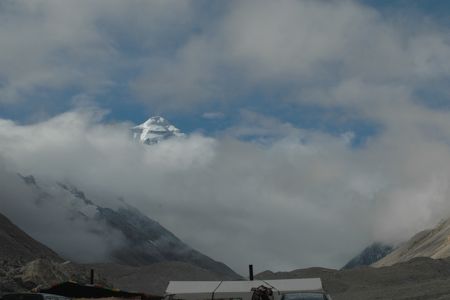
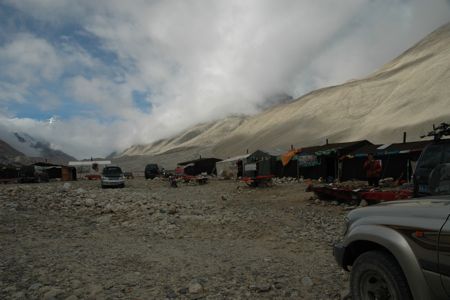
After our coffee and breakfast, we were ready to go with the hopes the clouds would clear. There is a shuttle offered (for a fee) to drive you, but we opted to walk the 5 kilometers to Base Camp. Let me remind you that we are at more than 5, 200 meters in elevation (that is 17, 000 feet for you imperialists), and the air is damn thin.
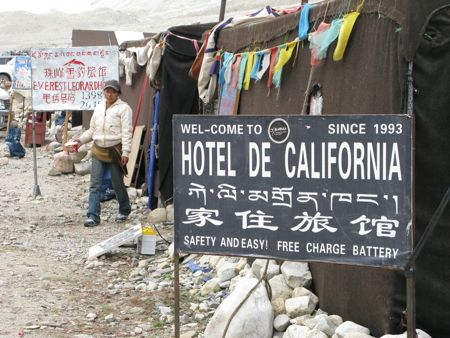
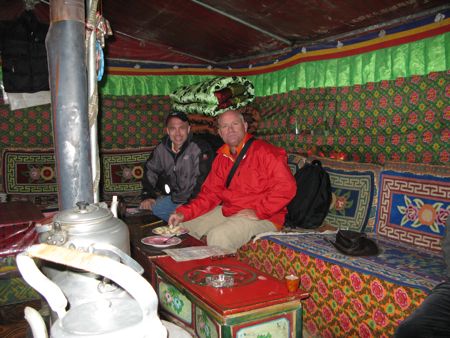
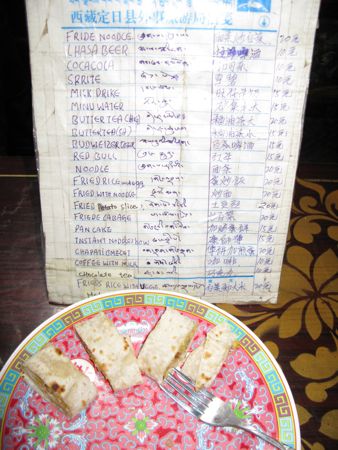
We start up the road, but quickly find a marked trail off to the left of the road that looks a little more direct. As we make our way along the trail, it at times disappears, but we go on “by feel†knowing the road is to our right. At one point, the altitude catches up with John (he decided he was not going to take altitude pills on the trip) and he needs a bit of a break. I continue on.
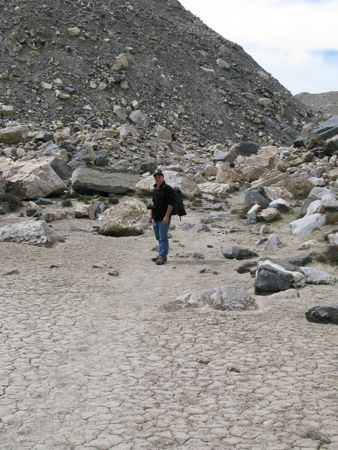
Finally, I come over a rise and can see a pile of rocks with prayer flags streaming from the center – that is my target! As I reach the next rise, I see the road and Base Camp about 100 meters down to my right – just a little more elevation what we needed! I also see Bhucheng, who opted for the bus, scrambling up the hill, yelling at me!
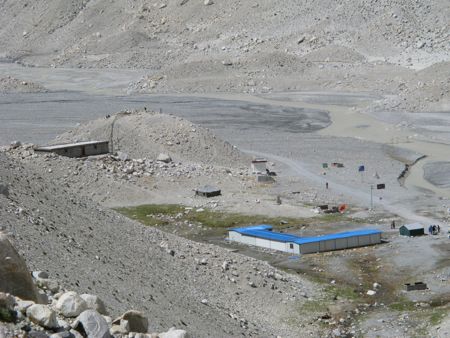
It seems that we are where we are NOT supposed to be and the army security was all over Bhucheng. There is an imaginary line that we are not to cross otherwise it is a US$300 fine. Well, we did not cross it. John finally makes it up the same spot where we take our photos, all the while with Bhucheng panicking. It was not until later did he tell us that he could lose his guide license for “not controlling his tourists”.
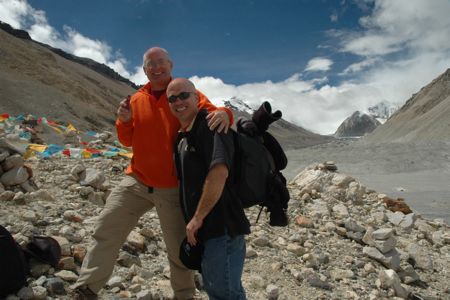
We then make our way to the official Base Camp to find a couple of buildings, signs and Army outpost. You may remember that the 2008 Olympic Torch Relay passed through here and to the top of Everest. We waited for a while hoping the clouds would clear more so we could see the whole mountain, but no luck – we had our perfect shots at sunrise.
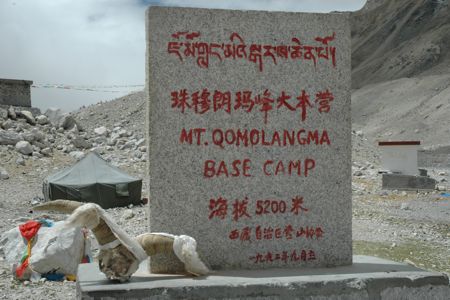
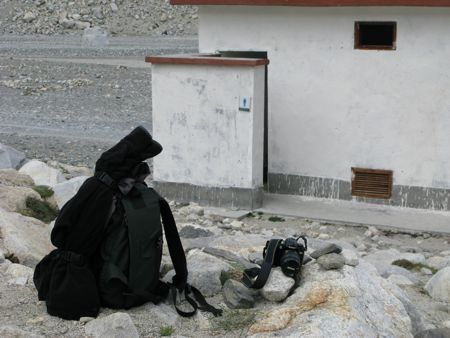
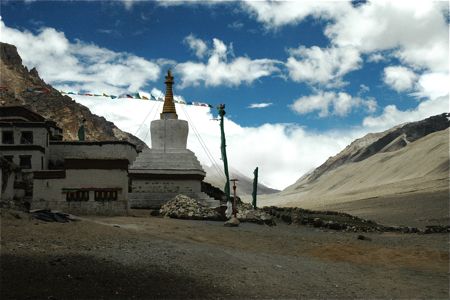
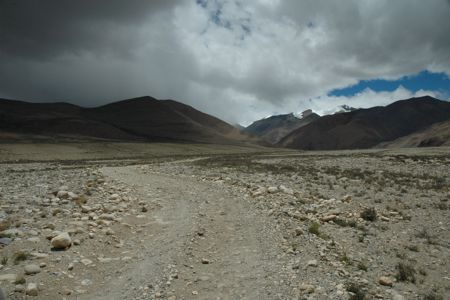
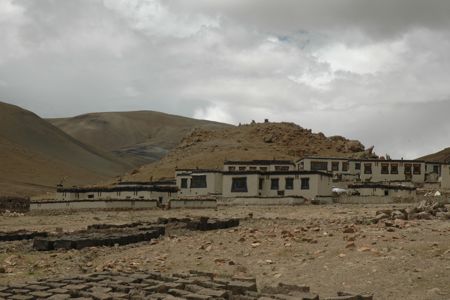
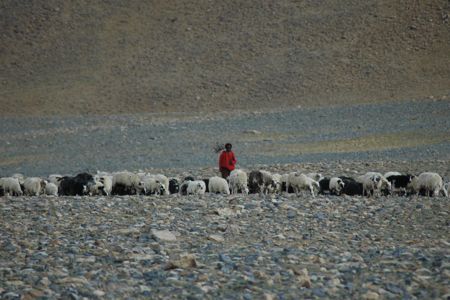
After our walk back down to the parking lot, it was back in the car. We made a quick stop at Rumbuk Monastery, the highest in the world. Then it was off – 76 kilometers of bone jarring double wide dirt yak path over moonscape and through idealic vallies passing remote villages and nomads to the town of Old Tingri.
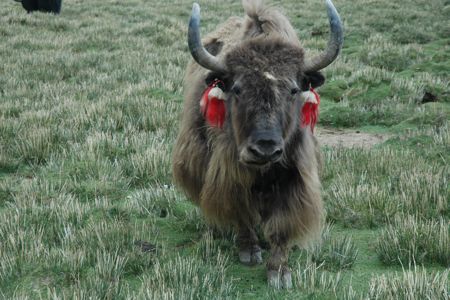
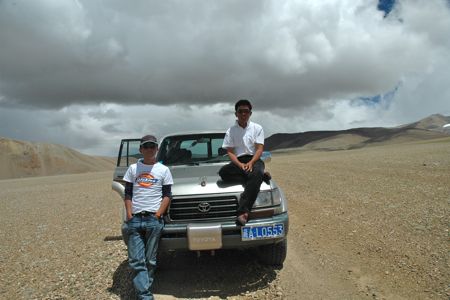
[quicktime]http://lyonfamily.tv/wp-content/uploads/2009/07/Moonscape.mov[/quicktime]
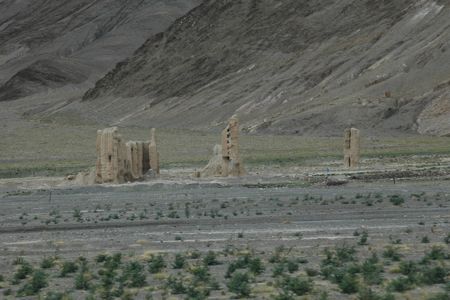
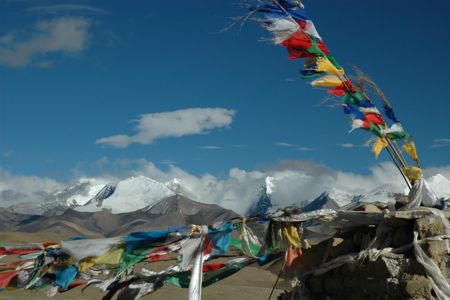
We made our lunch stop in Old Tingri – at 4:30 in the afternoon! But we still had miles to go – and it was slow going. The road through the Tingri valley was under construction, transitioning from gravel to a paved road. At some points, we were better off driving across the dusty plain than on the road. As we made our way along the Tingri plain, we passed the 1000 year of ruins of Tibetan castles use to protect and defend agains the Ghorka (Nepal) invasions. We made our way across the final two passes, LaBlungLa Pass and finally TongLa Pass (5, 100 meters) where we had a 360 degree view of the Himalayas. Everest was just out of view, but we could see from K2 to Annapurna.
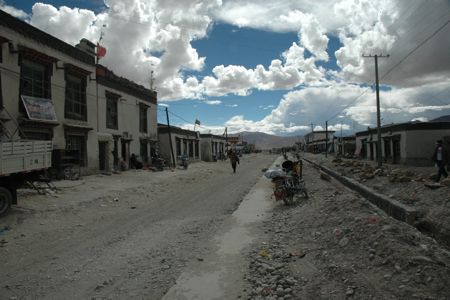
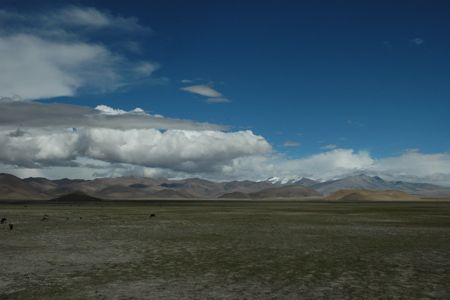

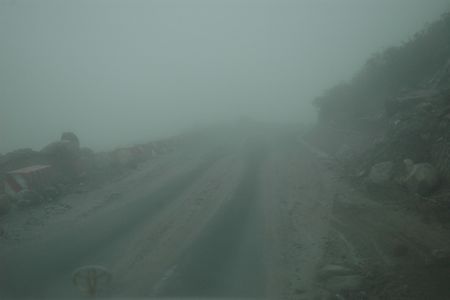
Our trip was nothing but down from here – literally. After TongLa Pass, we dropped into a river valley that led to Nepal. At the check point town of Nyalam, we went from dry to wet, dropping as the clouds pushed up against the Himalayas. The road was fogged in and the rain was falling. The road had been recently paved – Bhucheng told us the Chinese military has been working on paving the road for 5 years – and they are not done. It did not seem to matter, as large sections of the road were missing due to falling rocks.
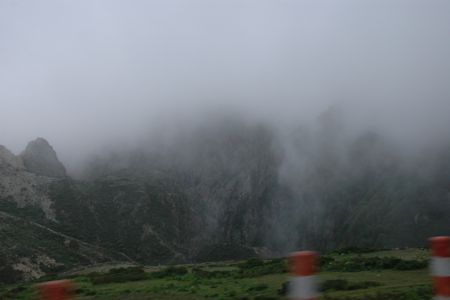
As we made our way down the hill, the rain continued to drive the rocks down upon us. Norbu was not only dodging rocks, but the oncoming traffic – pilgrims from Nepal who accustomed to driving on the left side of the road. He gave two honks at every turn, but that was little consolation for John and me. At one point, John and I reached to double check our seatbelts at the same time. This was one of the scariest and most treacherous roads I had ever been on.
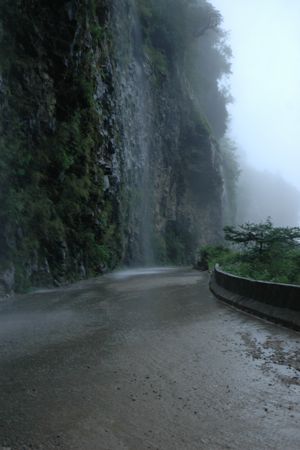
Our ride came to an end at 9pm. The road was closed for night construction at a point where a waterfall was streaming over the roadway. We were informed that the road would be closed until midnight. We also found out we were only 6km from ZhangMu, our final destination for the night. We decided to grab a small backpack and walk the rest, leaving Norbu with the car.
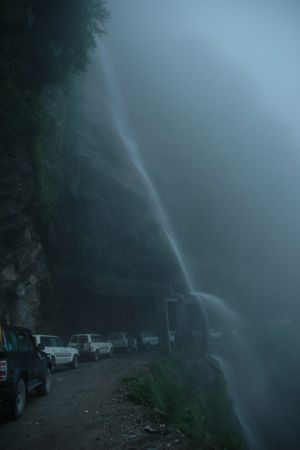
After passing the line of cars and crossing the barricades, we started slogging through the muddy section of road construction. On the downhill side of the road were tents for the workers, cantilevered over the steep hillside. We hadn’t made it more than 500 meters when we hear a military guy yelling at us. “Great, we are in big trouble!†But no – he tells us we are on the wrong side of the safety fence as they are about to start blasting up the hill. He then proceeds to lead us to “safetyâ€, climbing over and under equipment, debris and a chain link fence. After we reach the safe zone beyond the blast zone, he calls us a car from town to pick us up, though we continue to walk another kilometer before the car reaches us.
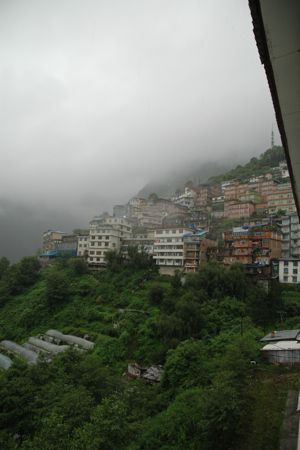
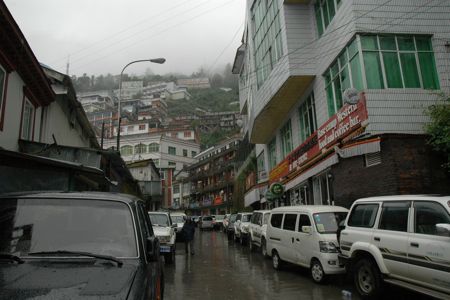
The driver takes us down the rutted road with its steep switchbacks. As we enter ZhangMu, the narrow road is lined with Nepali trucks there to exchange goods. Along the way to our hotel located on one of the lower switchbacks, we pass nothing but bars and brothels – a typical border town. After checking into our hotel at around 11pm, we have dinner and multiple beers at a place across the street and finally stumble into bed at 2am. One hell of a day!
Day 7 – July 2 – Border Crossing and on to Kathmandu
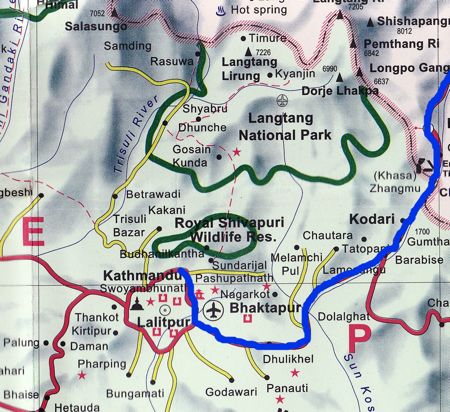
We awoke to the constant rain. Looking out the window, we could not even see ZhangMu as the town is shrouded in fog. In the light of day, we can see what a dive this place really is – the best hotel in town had a two star rating and we were staying there. When we checked in, we were told that hot water started at 7:30am and breakfast was down stairs. Well, we had neither. Finally at 8:30am, we are able to rattle the kitchen awake. And we were onto our second day with no shower.
The contrast between the Chinese and Nepali sides of the border is amazing. On the China side, the passport control is very organized – the building interior is the same as any other immigration building in China with marble floors and stainless steel counters with a stern faced officer behind it. On the Nepali side…if we did not have anyone meeting us, we would have missed the little building were we paid out US$25 visa on-arrival fee – and there was no passport check or border control to speak of.
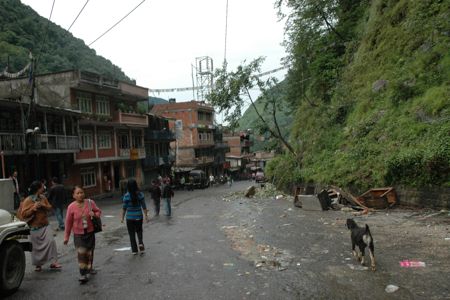
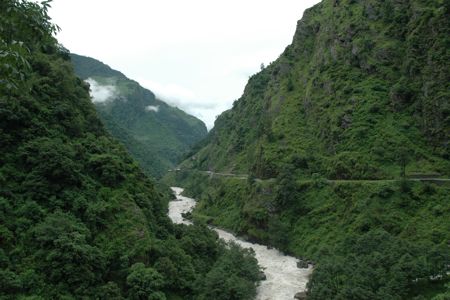
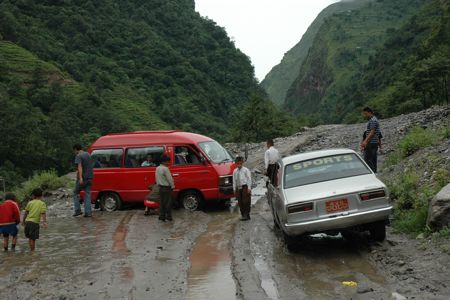
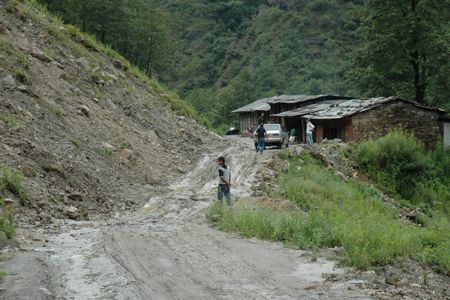
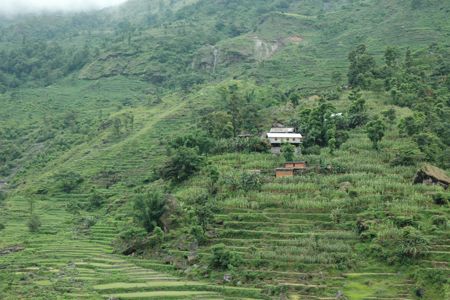
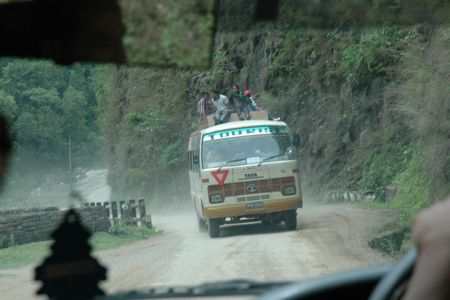
After meeting our guide, who was more than two hours late due to mud slides, we were off down the Votekasi river valley. The rain had lifted and we could see the green terraced farming on the steep valley walls.
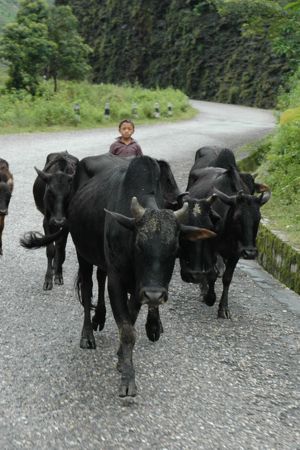
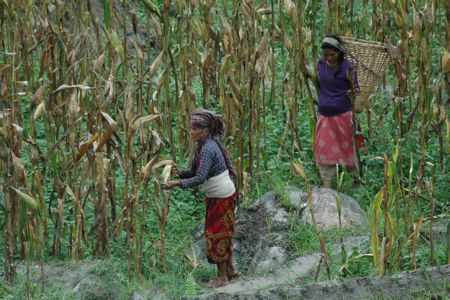
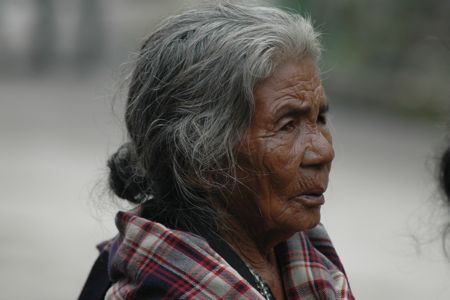
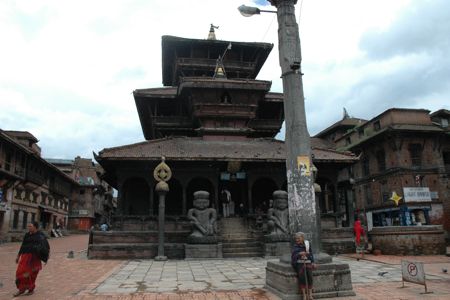
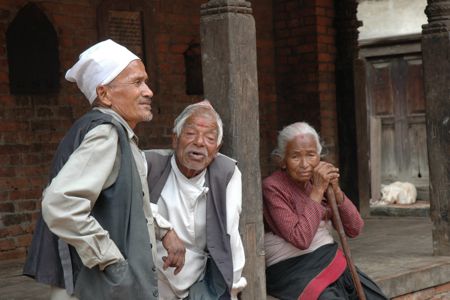
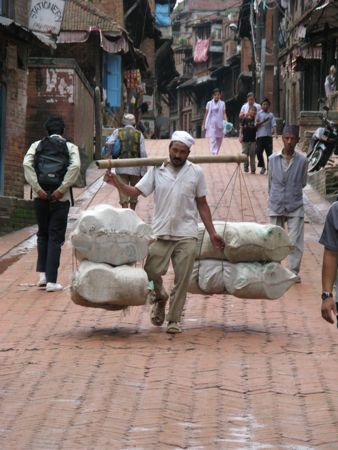
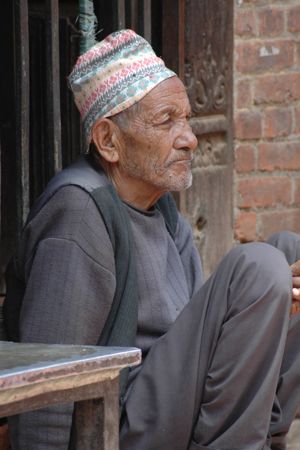
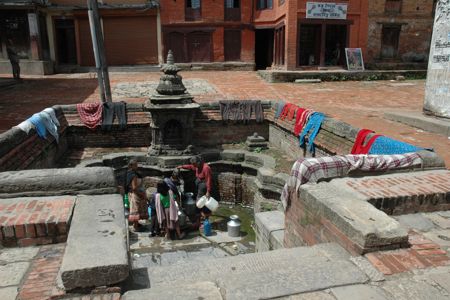
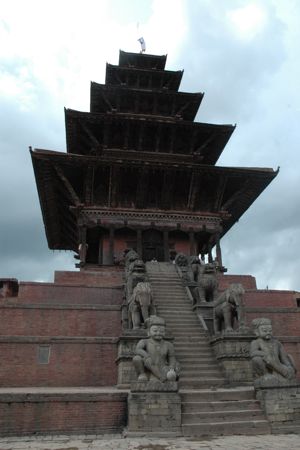
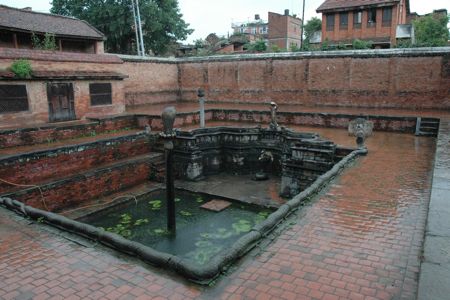
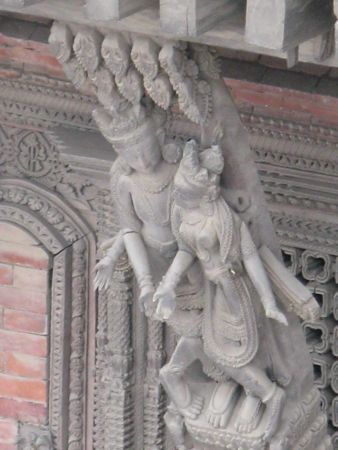
After about 3 hours, we arrived in Bhaktapur. What a contrast – from barren Tibetan villages to the red bricks and tight alley ways on Nepal. We spent the afternoon touring around the Durbar Square. The literal meaning of Durbar Square is a place of palaces. The area is a World Heritage site. It is home of traditional art and architecture, historical monuments and craft works, magnificent carved windows, excellent temples, beautiful ponds, rich local customs and culture.
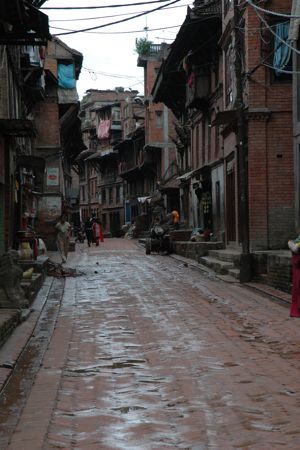
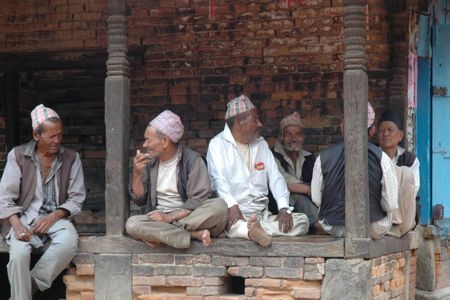
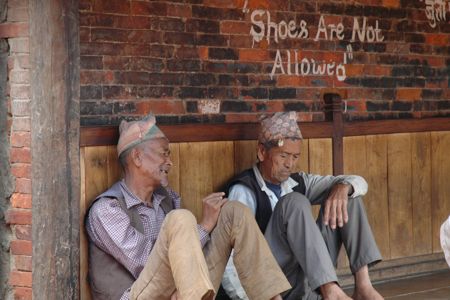
The evening was finished off with a traditional Nepali dinner and dance show where the audience participated.
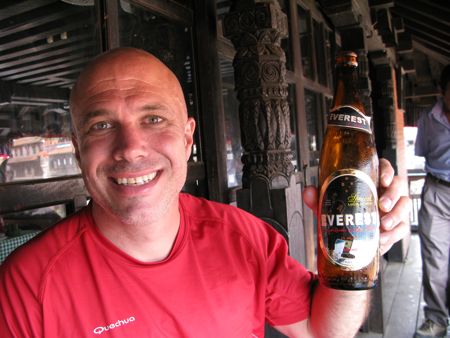
Day 8 – July 3 – Kathmandu
I awoke from one of the worst night sleeps ever! Not sure what it was; alcohol from the night before, the drop in altitude, or a brain aneurism, but I had the worst headaches in the middle of the night and could not sleep even after taking copious amounts of pain killers. Our first stop in Kathmandu for the day was the Pashupatinath Temple. The Pashupatinath Temple is the largest Hindu temple of Lord Shiva (Pashupati) in the world and regarded as the most sacred. Non-believers are not allowed in the temples, but we looked around the outside.
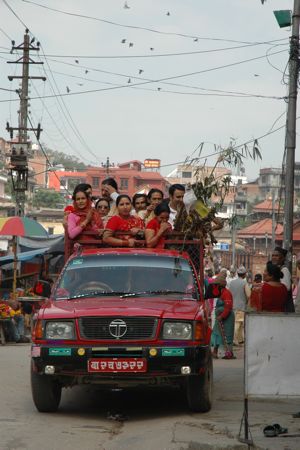
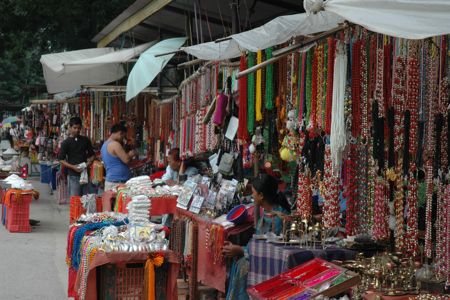
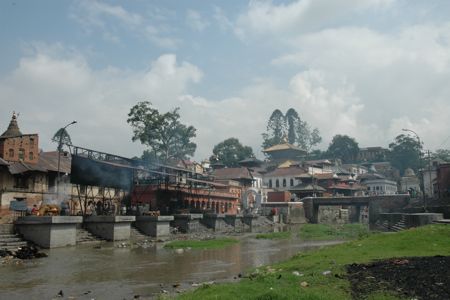
Beside the temple, the Bagmati River is a holy river – I would call it a polluted slough. But there were people bathing in the river and on the shoreline along with the ceremonial burning of the dead whose ashes are then dumped in the river.
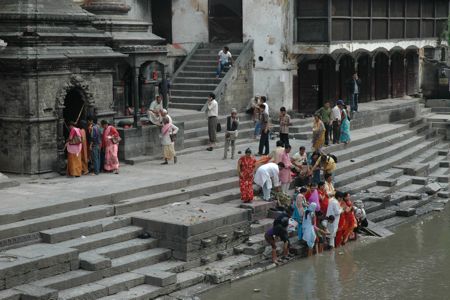
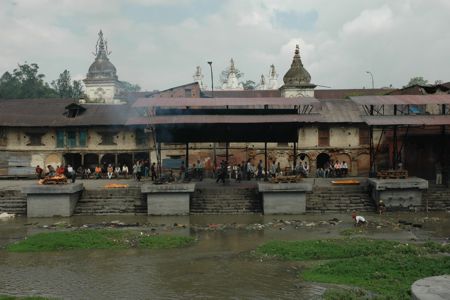
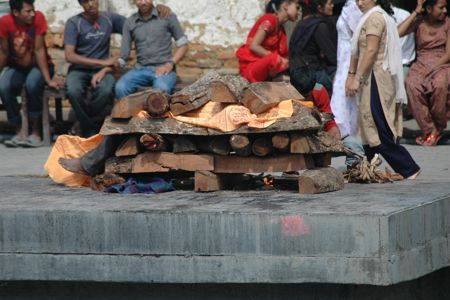
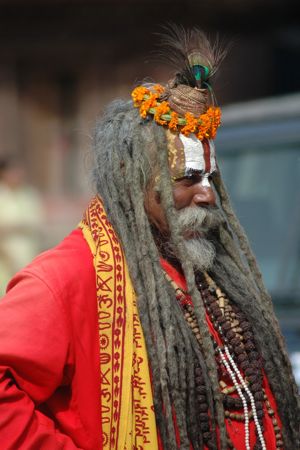
There were also the devout Hindu monks, the Sadhu, with face paint and all meditating nearby.
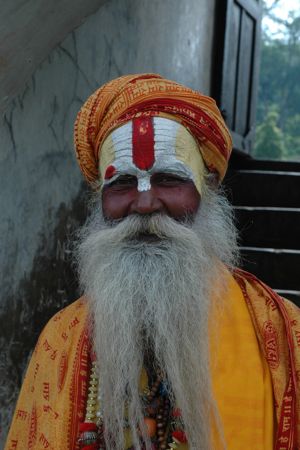
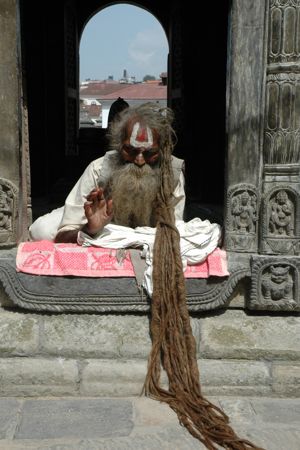
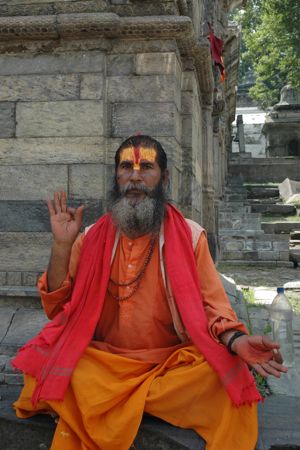
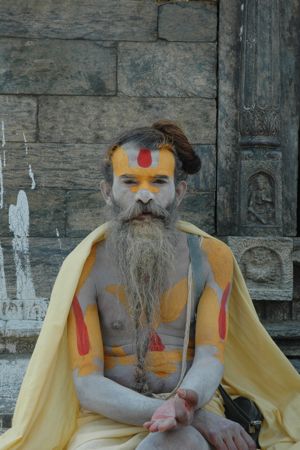
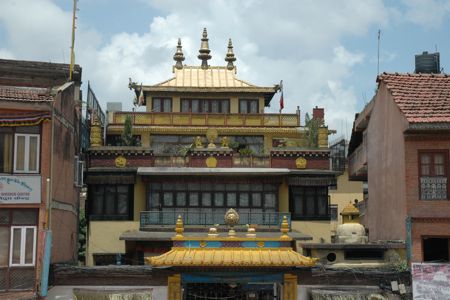
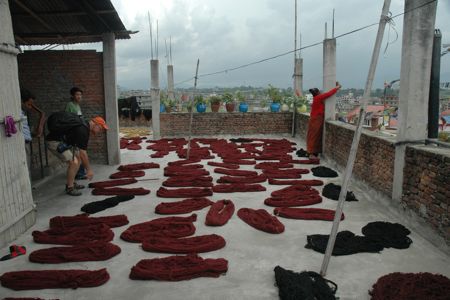
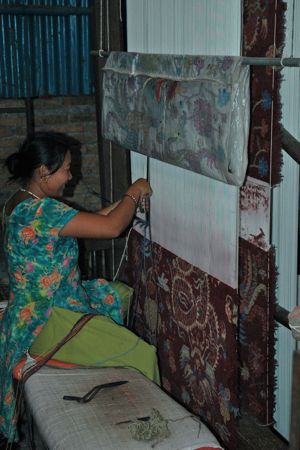
Then, we made our way to the Tibetan quarter of Kathmandu. Many Tibetan refugees have come to Nepal over the years, so there is quite a mix of Hindu and Buddhist traditions. After our visit to Boudhanath and the Eye of the Buddha stupa, we hooked up with Tamdin, the carpet guy. I had found him through the carpets that I had seen at the Banyan Tree Hotel in Zhongdian earlier in the year. We took a visit to his factory and eventually ordered various carpets from him to fit the house in California.
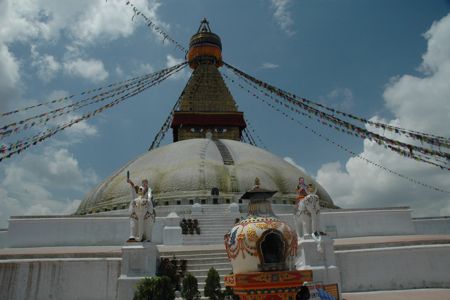
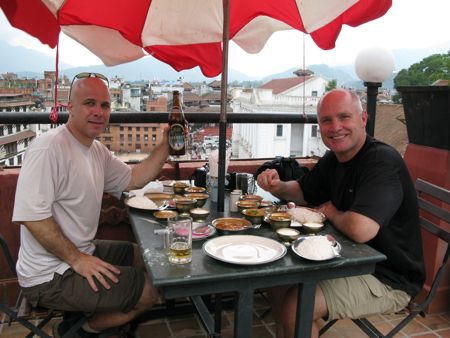
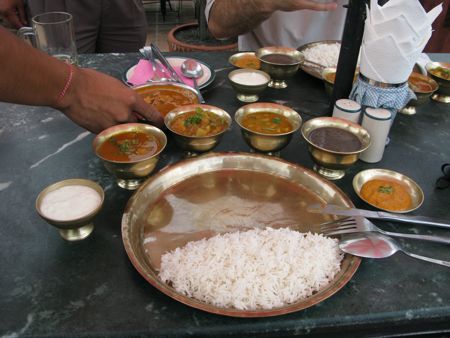
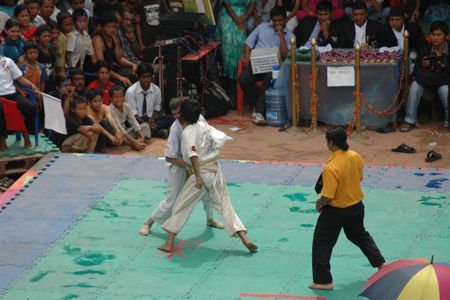
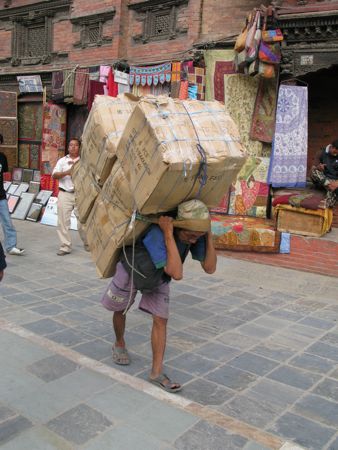
Now lunchtime, we set off to the Durbar Square in Kathmandu. This area is also a World Heritage site. The Durbar of Kathmandu is located in the old city and has heritage buildings representing four kingdoms (Kantipur, Lalitpur, Bhaktapur, Kirtipur). It was built over centuries, the earliest being the Licchavi dynasty. We enjoyed a rooftop lunch where we could watch a lunchtime kick-boxing match.
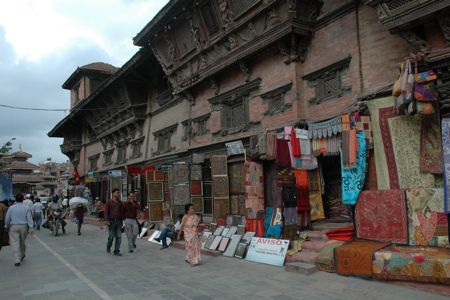
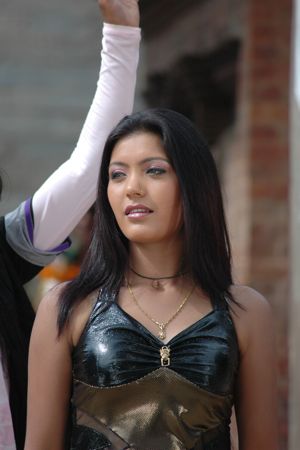
As we strolled around after lunch, there was a photo/video shoot going on. The crowds of men were thick so we made our way to see the smokin’ hot Nepali starlet on location.
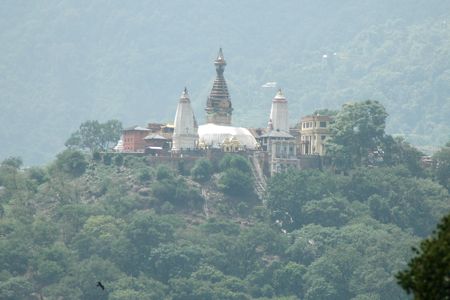
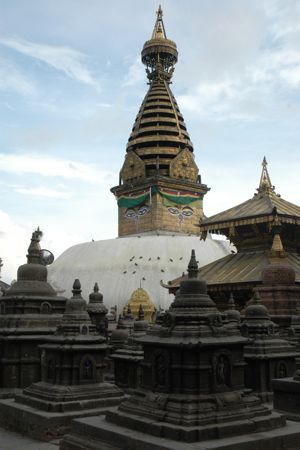
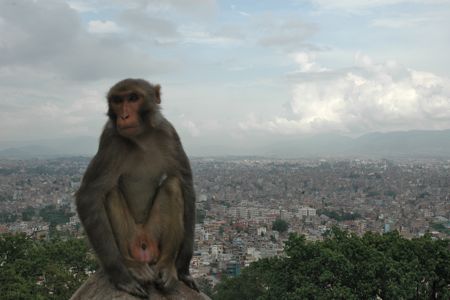
Now it was off to the Monkey Temple at the top of the hill, Swayambhunath – considered to be one of the most holy places in Kathmandu. Although the site is considered Buddhist, the place is revered by both Buddhists and Hindus. Numerous kings, Hindu followers, are known to have paid their homage to the temple. The evening ended with dinner and drinks in the Thamel district.
Day 9 – July 4 – Heading Home
Wow, what an adventure – with long intense days and cultural immersion. We have definitely seen contrasts – this was not a trip for the faint hearted. We caught our plane for Lhasa and back to Shanghai – with one last glimpse of Everest on the way.