Let me start by setting the stage. John Humes and I set off together on a “boys adventure†for 9 days across the Tibetan Plateau. Lhasa has the second highest airport in the world at a mere 4, 300m (14, 315ft). The trip starts in Lhasa, traverses more than 1, 000km (660 miles) of the toughest terrain on the planet, gains over 1, 000m (3, 200ft) to the base camp of Mount Everest and drops around 3, 000m (10, 000ft) to Kathmandu, Nepal.
There are some hot links sprinkled throughout to wikipedia for more detailed information on particular locations. Get a cocktail as this post is quite long. Enjoy the adventure – Cheers!
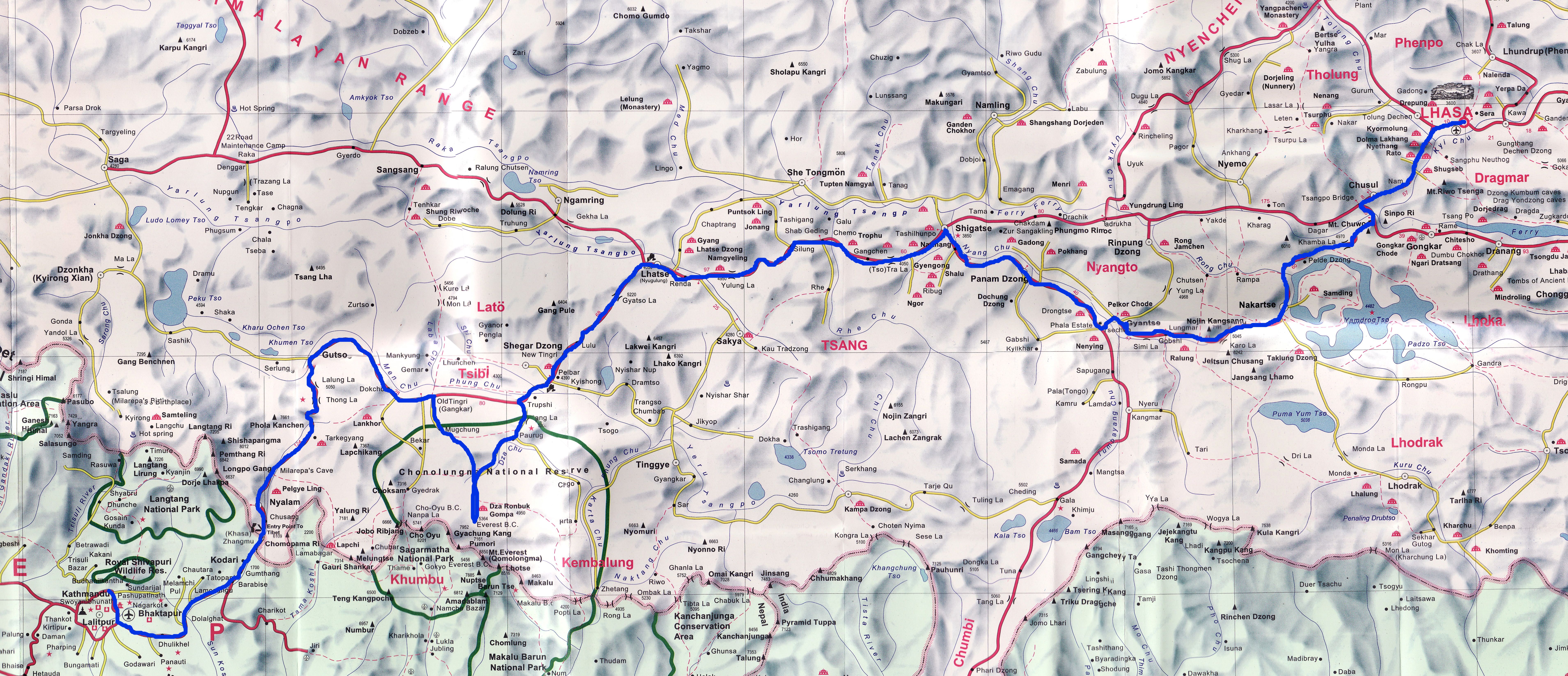
Day 1 – June 26 – Travel day to Lhasa (or so we thought)
Today was to be the travel day for John and I. We got to the Pudong airport and the fact that we say we are going to Lhasa sends the airline personnel into a frenzy. “Do you have a permit?†“Yesâ€. Off they run to the back room with the permit and passports, finally we get checked in. At security the same drill, a little extra check through the scanners…finally ready to board. The schedule was a quick flight to Xian and then transfer to Lhasa for a relaxing afternoon of acclimation.
Well, that did not happen. The day started ominously with a flight delay of more than an hour. Knowing that we had a continuing flight though Xian, we expected no problem. We arrived in Xian and transferred to our next plane with little to do. Off to Lhasa…all until we were about to land. We had to turn around to go back to Xian due to high winds at the Lhasa airport.
We arrive back in Xian, no one with China Eastern knows what is going on as they herd us to a bus that takes us to the Aviation Hotel (in other words, the crew hotel –a total dive – adjacent to the airport). They set us up with rooms, dinner and no information. Finally at about 10pm, we are informed we are leaving at 8am the following day.
Day 2 – June 27 – Lhasa, Tibet
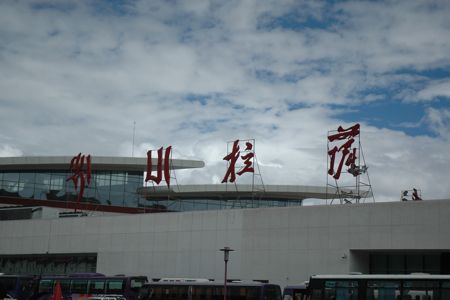
The morning rolls around with a bus pick-up at 7am. We were told to be ready to go, we got to the airport again with no communication from the ground staff. John and I pull the “walk to the front of the line†stunt (a very Chinese thing, you should know) to get our boarding passes, through the extra security drill again and finally on the plane. We land at 10:45am and the plane door opens to the thinnest air I have breathed ever. It will be an interesting day with no acclimation – sure glad I am taking the high altitude pills!
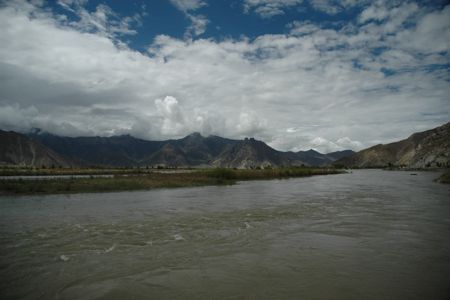
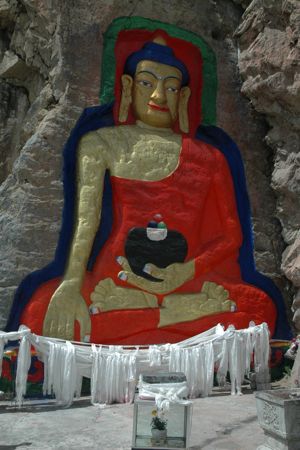
After John and I meet our guide, we head off to Lhasa where we check in our hotel in town around 1pm and finally lunch at 2pm.
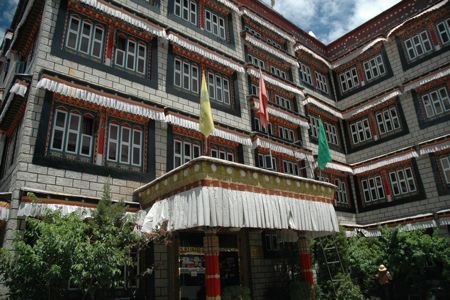
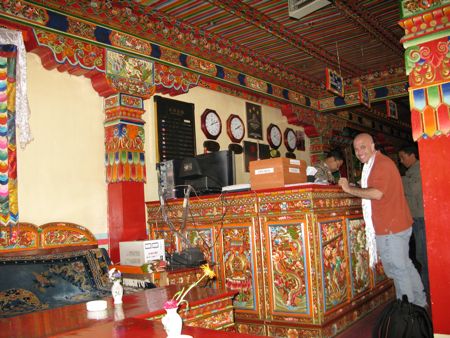
Then, it is off to the Summer Palace (Norbulingka) of the Dali Lama. At Norbulingka, there are a number of portans (living areas with temples). The different portans where built by the succession of Dali’s over the years each adding to the summer palace size.
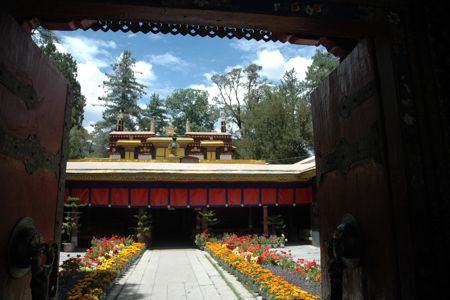
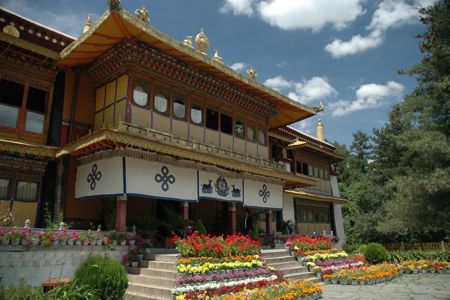
It is prohibited to take pictures inside. Many of the interiors are rather similar – spartan living areas and very opulent religious areas with many Buddha statues, gold leaf appliqué and the burning of yak fat candles blacking everything.
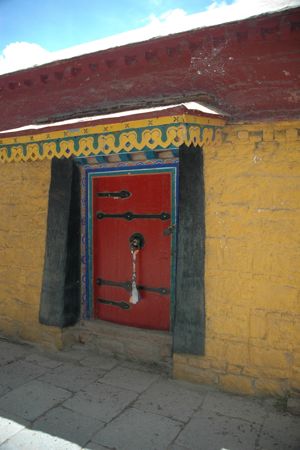
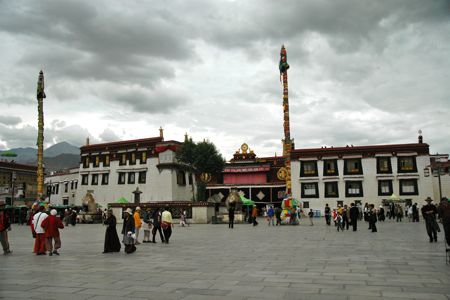
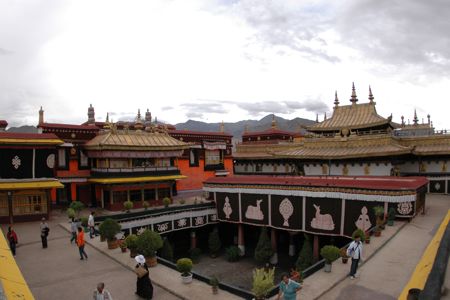
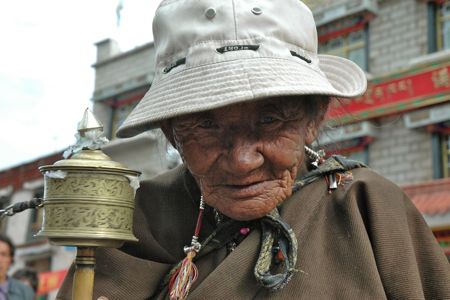
Next, we moved across town to the holiest temple of all – Jokhang Temple. It was built during the reign of king Songsten Gampo (605?-650 CE) to celebrate his marriage with Chinese Tang Dynasty princess Wencheng, who was a Buddhist. This temple is where the pilgrims postulate themselves on the ground in front of the temple and also walk clockwise around the outer walls of the Barkor with prayer wheels spinning.
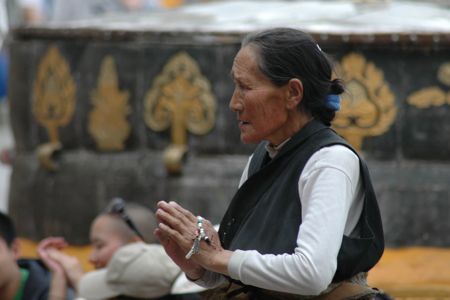
[quicktime]http://lyonfamily.tv/wp-content/uploads/2009/07/Pilgrims_2.mov[/quicktime]
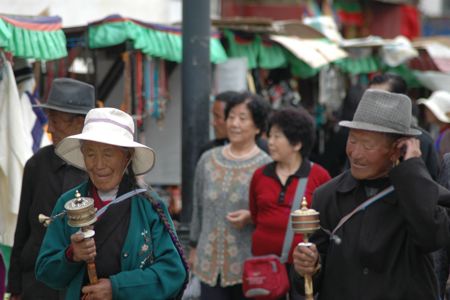
[quicktime]http://lyonfamily.tv/wp-content/uploads/2009/07/Pilgrims_1.mov[/quicktime]
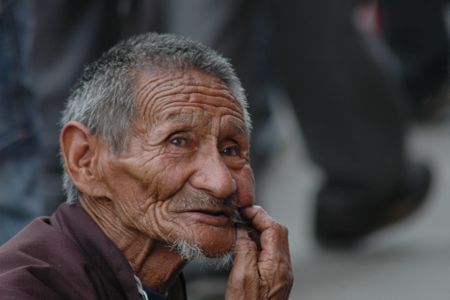
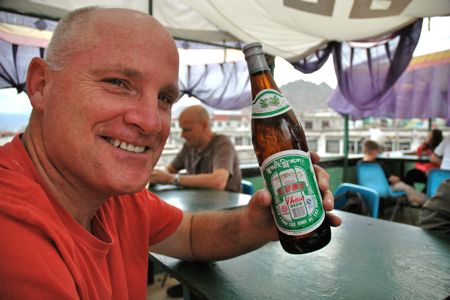
After our close up experience with the pilgrims, we dined at the New Mandala Café overlooking Jokhang Temple. Dinner consisted of lamb ribs and beer. It finally got dark around 10pm – we survived the day with no acclimation!
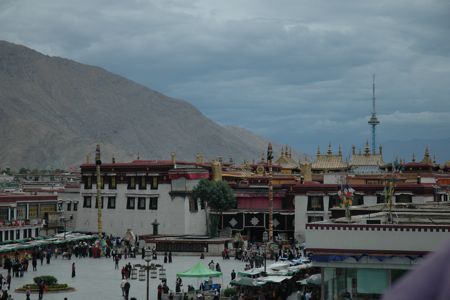
Day 3 – June 28 – Lhasa, Tibet
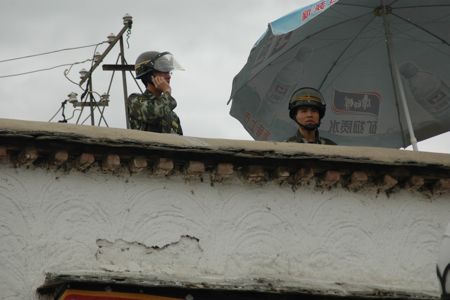
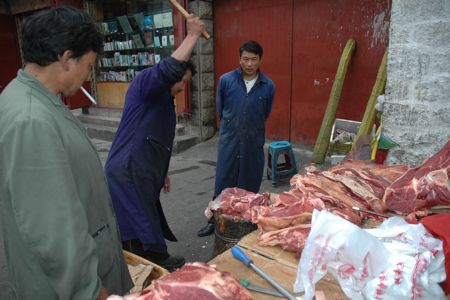
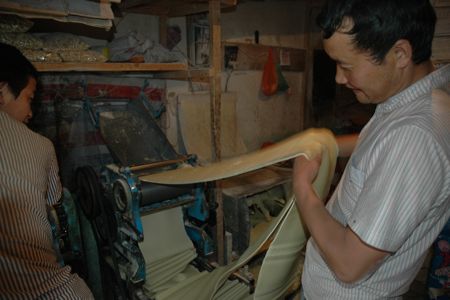
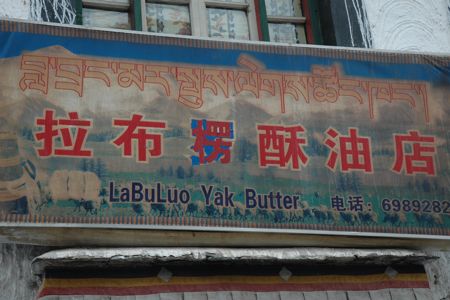
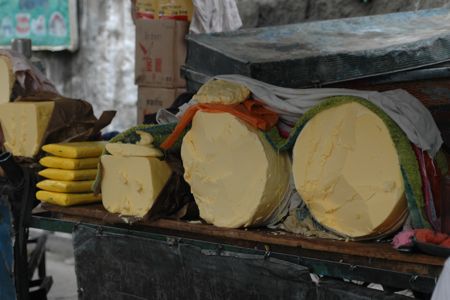
The world is familiar with the uprising in Tibet in 2008. Well, today we went to the heart of it – Ramoche temple. This is where the monks started their protests that quickly escalated. Today all is quiet – though significant military presence. Tradition says that the temple was built originally to house the much revered Jowo Rinpoche statue. The statue was carried to Lhasa via Lhagang in a wooden cart and brought to Tibet when Princess Wen Cheng came to Lhasa. We started out on foot through the streets from our hotel. The daily markets, shops and stalls where open for business selling fresh yak meat, yak butter and, of course, lamb and yak skins.
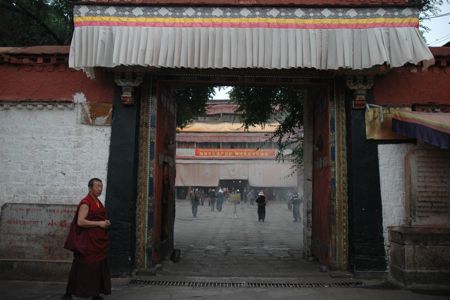
Ramoche temple allows photos inside, so we were able to give a sense of the inside of most of the monasteries throughout Tibet.
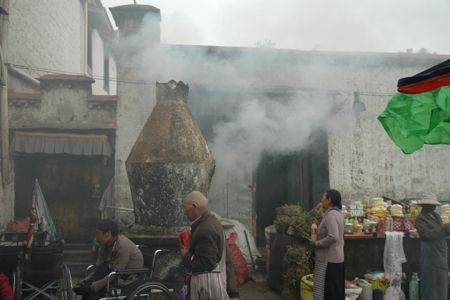
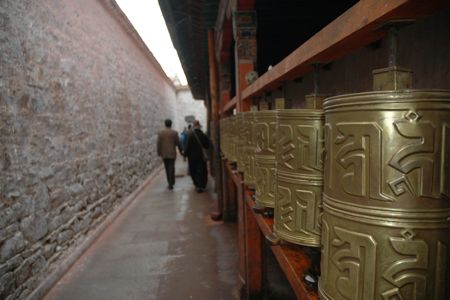
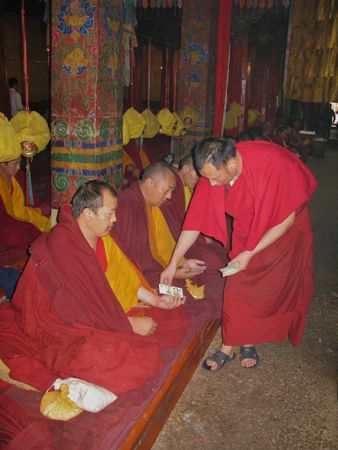
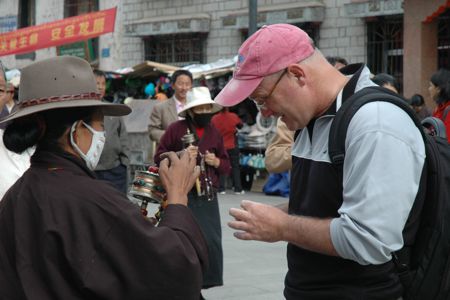
After our visit to Ramoche, we wound our way back through the narrow streets to the Barkor where we bought prayer wheels as souvenirs. There was a wide variety to choose from, so we went for something antique. It seems that many families will sell their older prayer wheels to make a little cash.
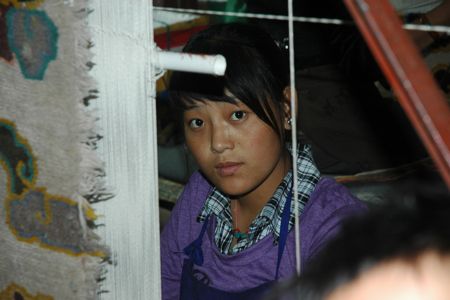
One of the missions I was given by Brenda was to find and buy Tibetan carpets. The Tibetan carpets are all lambs wool with a high pile and unique designs. Prior to the journey, I had found a few carpet places along our route – one right here in Lhasa.
After our carpet stop, it was to the Potala Palace – the centerpiece of Lhasa as well as the iconic image of Tibet. The palace rises 13 stories above the flat land – stairs are the only way to the top. The Potala Palace was the chief residence of the Dalai Lama until the 14th Dalai Lama fled.
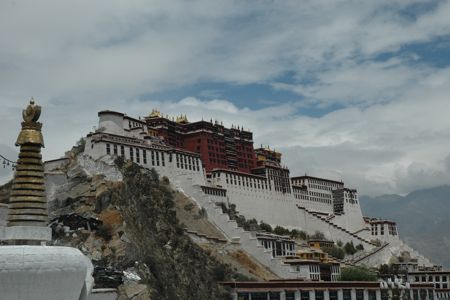
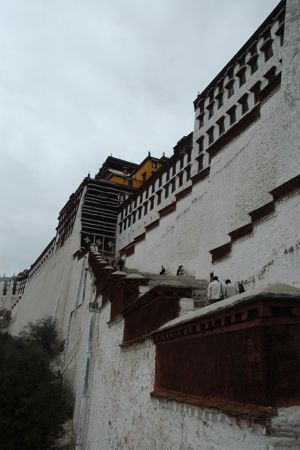
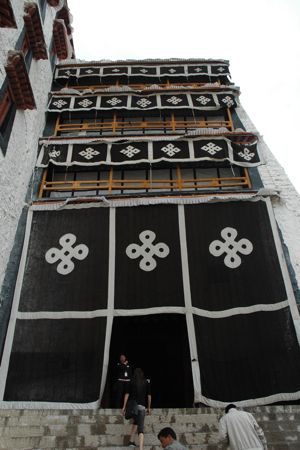
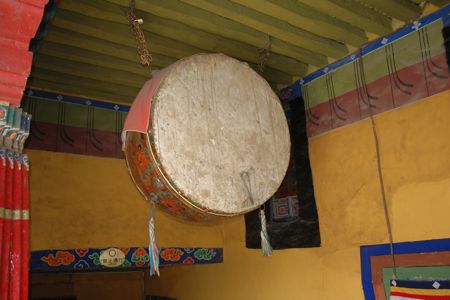
In front of Potala, there is a constant stream of pilgrims as well as the plain-clothes policemen carefully eyeing them. Upon climbing to the top, the moment we entered the palace, no more photos (though you can buy a postcard deck with the interiors).
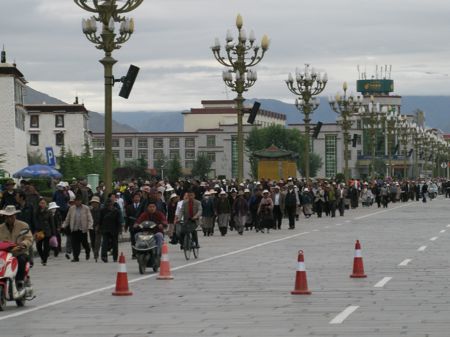
The interior is similar to Ramoche, but only more of it – winding corridors, multiple temples packed with Buddha statues and Spartan living quarters. Frankly, the outside is more impressive than the inside!
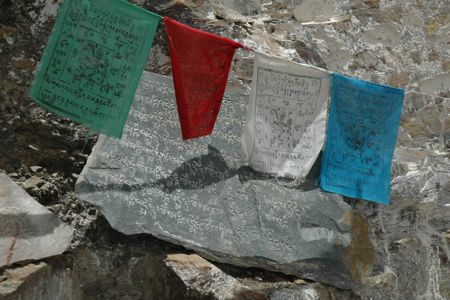
After lunch we were off to Sera Monastery…and we were getting monastery-itis. It is like going to Europe and visiting cathedral after cathedral – they all start to blur together. Over the last two days, we have heard about so many different Buddhas that I can not keep them straight. And I thought Catholicism was complicated!
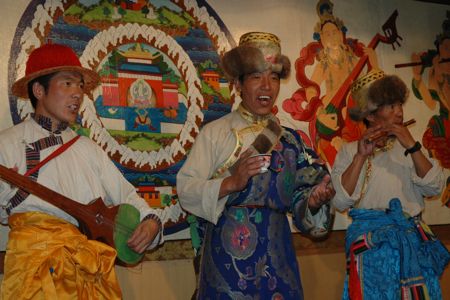
This evening, we enjoyed dinner at Shangri-La restaurant (No, not the 5-star hotel restaurant). We were entertained with a show highlighting the different traditional cultures of Tibet. After, we went to a well deserved foot massage. It was a great Tibetan style foot massage, though I almost lost all the skin on my feet from the near scalding water!
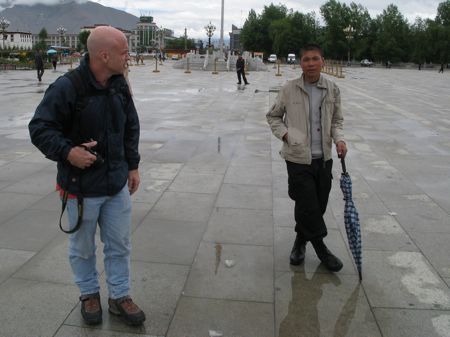
As I mentioned, the exterior of Potala Palace is quite impressive, so we wanted to get pictures at night, all lit up. We arrived in the square across from the Palace at about 10pm. After a quick walk to a perfect spot in the plaza, I set my camera backpack down and was setting up my tripod and changing lens when this military kid rapidly approaches me to tell me I need to pick up my pack. I explain to him (in Chinese), that I cannot pick it up and take photos at the same time. This conversation goes on for about 2 minutes while I am setting up, all the while I continue to ask him to take two steps to the right so I can take my photo and move on. Finally, another guy come over to the first guy and they step away, so I get my first chance to look through the view finder and get set…lights out! I get no photo!
You may get the gist by some of my earlier comments that there is high military presence in Tibet – in fact it is an occupied land. In Lhasa, there are a minimum of two soldiers at each corner – eight per intersection. That does not include the uniformed soldiers marching through the street and the numerous not-so-inconspicuous plain-clothed officers around the religious spots.
…CONTINUED..Lhasa to Katmandu – OVERLAND Part 2