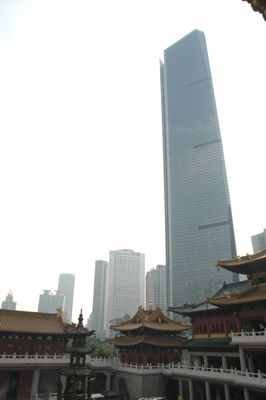
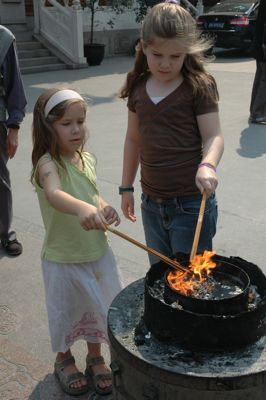
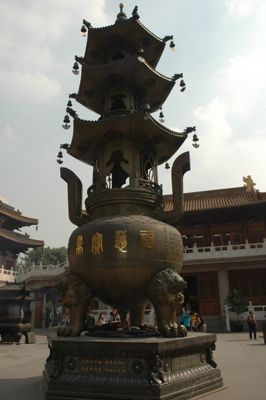
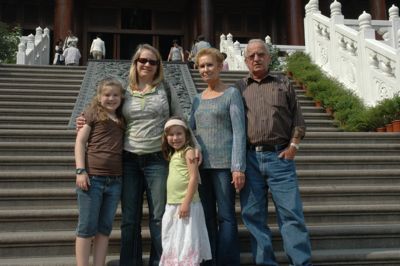
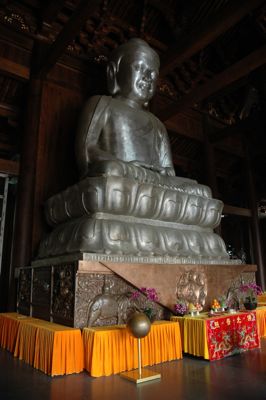
For Grandma and Grandpa’s last weekend in Shanghai, we decided to see some of the sights. Our first stop was the Jing’an Temple on West Nanjing Lu. The Jing’an Temple (é™å®‰å¯º; literally “Temple of Peace and Tranquility”) is a Buddhist temple. The first temple was built in 247 AD, at the time of the Kingdom of Wu, during the Three Kingdoms period. Originally located beside Suzhou Creek, it was relocated to its current site in 1216 during the Song Dynasty. The current temple was rebuilt once in the Qing Dynasty. The temple is located in the middle of the City which has grown around it. After living in Shanghai for four years, we had not visit the temple until today.
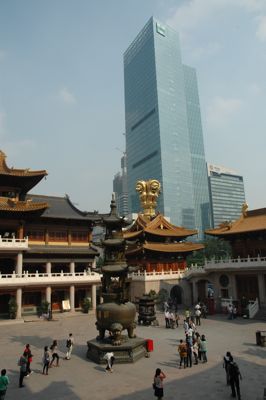
This structure is located in the center of the courtyard. People throw coins into the openings for good luck. It is harder than it looks! Elle was picking up all the coins that we missed for retries. It took a few tries for me to get one in.
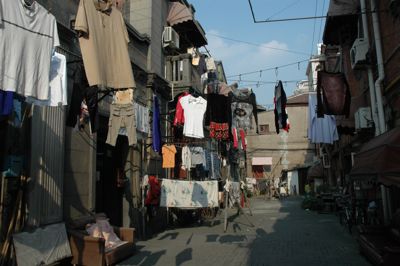
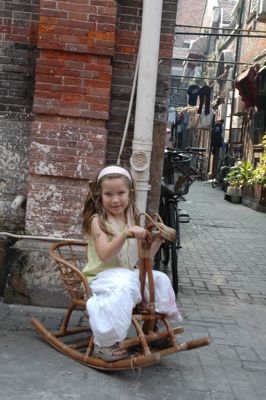
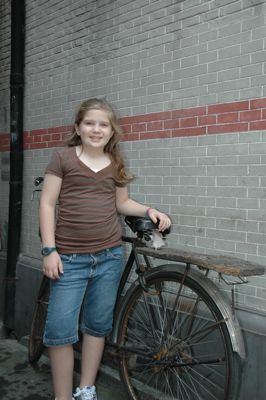
Our next stop out and about in Shanghai was the Shikumen homes (石库门), literally “stone gate”, is an architectural style for residential buildings in Shanghai combining Western and Chinese elements that first appeared in the 1860s. At the height of their popularity, there were 9, 000 shikumen-style buildings in Shanghai, comprising 60% of the total housing stock of the city. The Shikumen homes/neighborhoods are slowly being torn down. It is interesting to walk through the streets to see these homes before they are all gone.

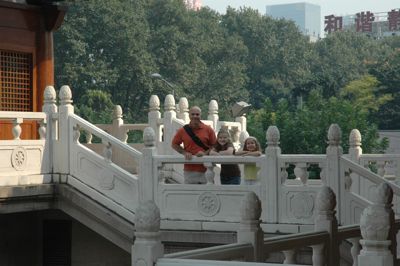
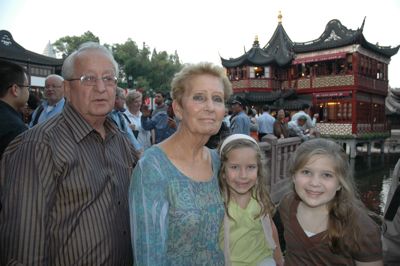
We left the Shikumen neighborhood for YuYang Gardens (Yu Gardens). There are actual gardens at YuYang, but I have never been to them. Mimi and Papa toured the gardens when they visited us in Shanghai. We go to Yu Gardens for the shopping. The area around the gardens has many old style buildings. YuYang is touristy, but interesting. The Grandparents also needed to see the zig-zag bridge. I don’t think anyone really saw it as there were too many people. We did enjoy a bit of shopping.
Before dinner, we stopped by Xintiandi. Xintiandi (新天地) is an affluent car-free shopping, eating and entertainment district of Shanghai. It is composed of an area of reconstituted traditional shikumen (“stone gate”) houses on narrow alleys, some adjoining houses, which now serve as book stores, cafes and restaurants. Most of the cafes and restaurants feature both indoor and outdoor seatings. Xintiandi means “New Heaven and Earth”, and is considered one of the first lifestyle centers in China. Xintiandi is near the site of the First Conference of the Communist Party of China.
One of the restaurants had this poster for Octoberfest.

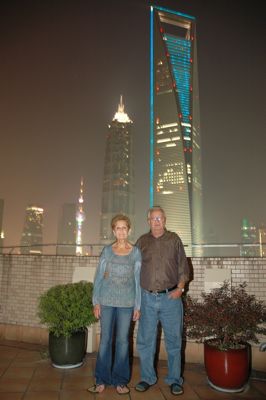
After dinner in the French Concessions, we enjoyed the beautiful evening on our deck.