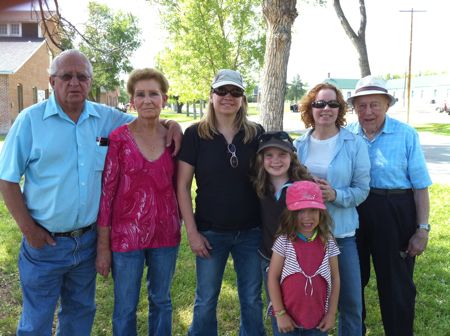
When Terri goes to South Dakota with Andy and his family, we meet at Fort Robinson to pick her up. The Fort is about half way between Rapid City and Mitchell. In the past, we have had lunch and left. This year, we signed up for the horse trail rides. It is a 45 minute ride for $15. Riders are to be 6 years old, but the women said Elle was close enough which made her happy.
Andy, Terri, Emmy, Elle and I all went on the horse trail. Of course, I made the girls wear the optional helmets (it sure is tough having me for a Mom)!
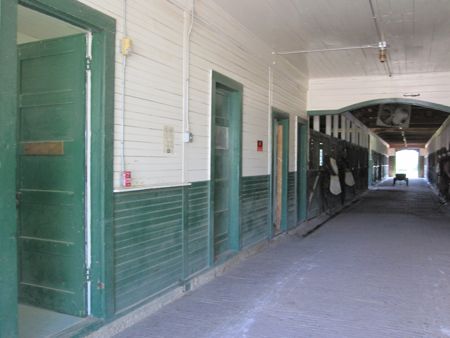
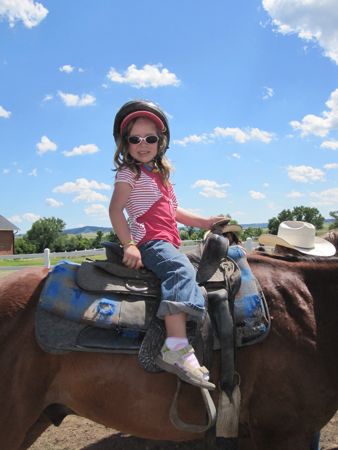
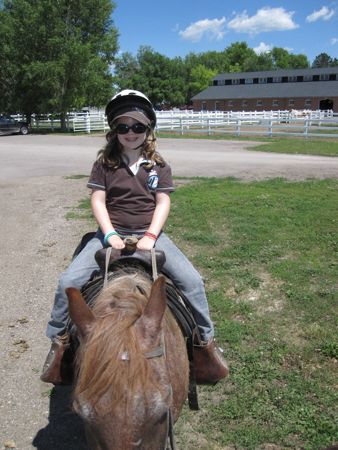
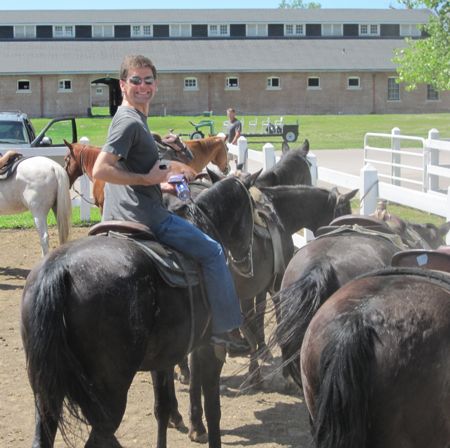
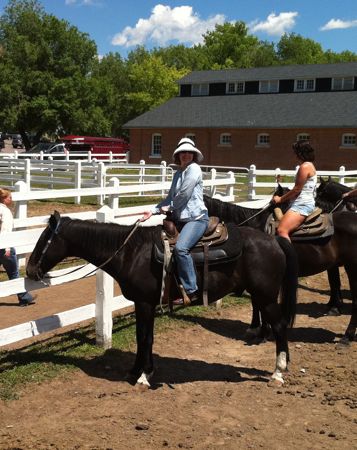
On the trail, Emmy’s horse, Smurf, had to be last. Therefore, I was in between the girls on Pedro.
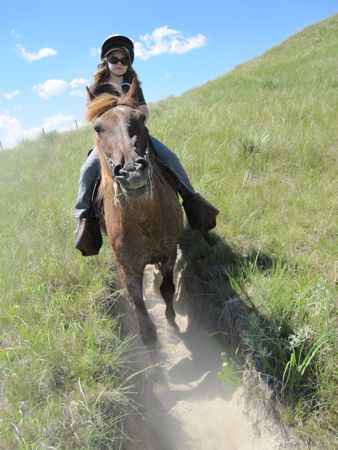
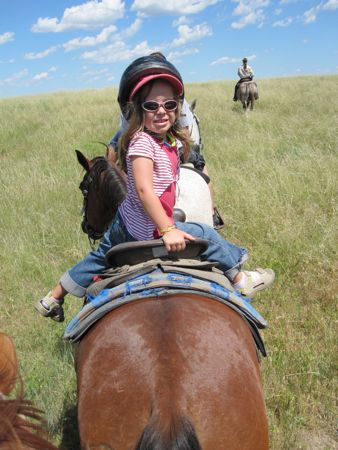
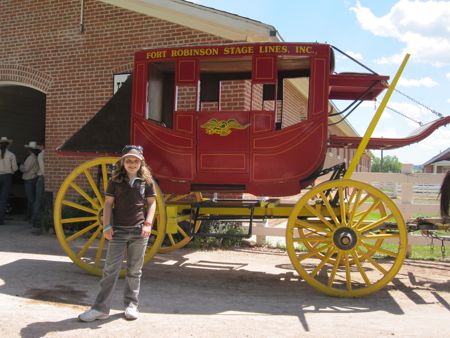
While we enjoyed the horse trail, Grandpa, Grandma and Ray (Andy’s Dad) went on the historical coach ride. It was a historic hay wagon ride, as the coach was at a local parade.
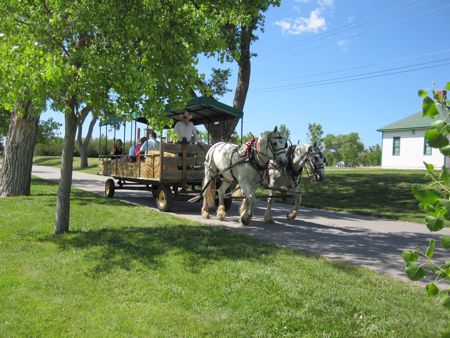
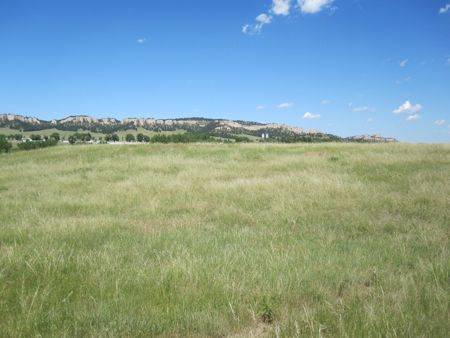
The older folks said it was very interesting and enjoyed it. They reported back that currently Ft. Robinson is the largest established fort in the States. Therefore, I was interested in learning more about this Fort we visit each summer. Here is what I found on the “great big book of the internet” or the “smart box” as Grandpa calls it.
In March 1873, the U.S. Government authorized the establishment of a military camp. Home to some 13, 000 Lakotas, some of them hostile, there was tension on the Great Plains.
The camp was named Camp Robinson in honor of Lt. Levi H. Robinson, who had been killed by Indians while on a wood detail in February. The camp was renamed Fort Robinson in January 1878. Fort Robinson played a major role in the Sioux Wars from 1876 to 1890. The Battle of Warbonnet Creek took place nearby in July 1876. Crazy Horse surrendered here with his band on May 6, 1877. Later that year, he was fatally wounded while resisting imprisonment on September 5. A historic plaque marks the site of his death.
In January 1879, Chief Morning Star (also known as Dull Knife) led the Northern Cheyenne in an outbreak from the agency. Because the Cheyenne had refused to return to Indian Territory, where they believed conditions were too adverse for them to survive, the army had been holding them without without adequate food, water or heat during the severe winter to try to force them into submission. Soldiers hunted down the escapees and killed most over the next several weeks. The event marked the end of the Sioux Wars in Nebraska.
In 1885, the U.S. 9th Cavalry Regiment, nicknamed the Buffalo Soldiers, was stationed at Fort Robinson. This was an all-black unit.
In 1919 at the end of World War I, Fort Robinson became the world’s largest quartermaster remount depot. It was used as a breeding and training center for horses and mules for the military. In addition, stallions owned by the military were used to breed with local stock to improve it. During World War II, the fort was the site of a K-9 corps training center. Later it was used to hold a German prisoner-of-war camp.
After 74 years of military use, Fort Robinson was transferred to the United States Department of Agriculture in 1948 for use as a beef cattle research station. The USDA closed its research station in 1971.
A new chapter of Fort Robinson’s history began in 1955. The US Army excessed a portion of the fort, which was acquired by the Nebraska Game and Parks Commission to be used as Fort Robinson State Park. The park encompasses 22, 000 acres.
An interesting history lesson from the internet on our local Fort Robinson.
After enjoying some ice cream Andy’s Dad bought for the crew, it was time to say good-bye to Ray and Andy.